
TLDR
Choosing a kitchen sink starts with fit, not style. Measure the sink base cabinet and confirm countertop material before picking a mounting type, bowl configuration, depth, or material. For most remodels with a dishwasher, an undermount single bowl stainless steel sink in 16 or 18 gauge with a brushed finish and tight radius corners is the safest default. Finalize the sink spec before countertop templating to avoid costly rework.
How Do You Choose the Right Kitchen Sink?
Choose a kitchen sink in this order: measure the sink base cabinet, confirm the countertop and cutout requirements, choose the mounting type, select the bowl configuration, then compare depth, material, and features. For many remodels, a 30 to 33 inch single bowl stainless steel sink with an undermount installation is a practical starting point, but the correct sink depends on cabinet clearance, countertop material, cooking habits, and plumbing layout. Always verify the manufacturer’s minimum cabinet size and installation template before ordering.
Kitchen Sink Quick Decision Guide
Use this table to narrow the choices before comparing individual sinks.
| If your priority is… | Start with… | Why |
|---|---|---|
| Easiest replacement | Drop in sink | Usually requires less countertop modification |
| Seamless countertop cleanup | Undermount sink | The countertop sits over the sink rim |
| Large pots and sheet pans | Single bowl sink | Provides one uninterrupted basin |
| Washing and rinsing separately | Double bowl sink | Creates two dedicated work areas |
| A compromise between single and double | Low divide sink | Separates tasks while allowing larger items to span both bowls |
| Food preparation at the sink | Workstation sink | Adds ledges for cutting boards, colanders, and racks |
| Farmhouse style design | Apron front sink | Creates the exposed front look |
| Low maintenance stainless steel | 18 gauge or thicker stainless | Common durable residential specification |
| Maximum under sink storage | Rear or offset drain | Can move plumbing away from the center of the cabinet |
| Sink replacement without changing the counter | Match the existing cutout and mounting style | The existing countertop usually determines the replacement dimensions |
| New cabinets and countertops | Select the sink before countertop templating | The sink affects the cabinet, cutout, faucet, and plumbing layout |
Why Choosing a Kitchen Sink Is Harder Than It Looks
A kitchen sink is not a standalone purchase. It connects to the cabinet beneath it, the countertop around it, the faucet above it, the disposal inside it, the dishwasher beside it, and the plumbing behind it. Get one of those connections wrong and the fix is expensive.
Most buying guides start with materials or Pinterest worthy photos. That approach is backwards. The best looking fireclay farmhouse sink is still the wrong sink if it does not fit the cabinet, requires unsupported countertop modifications, or blocks the pull out trash.
This guide follows a different order. It walks through how to choose a kitchen sink by working from the inside out: cabinet fit first, then countertop, then mounting type, bowl configuration, material, and details. Along the way, it defines every term shoppers see on spec sheets but rarely understand.
If you are coordinating cabinets, countertops, and sinks for a remodel, compare contractor pricing and lead times before locking in decisions.
1. Determine Whether You Are Replacing or Remodeling
Before comparing kitchen sink sizes or materials, determine whether the countertop is staying.
Sink Only Replacement
If the countertop is staying, the existing cutout is your starting point. Measure the current sink, countertop opening, sink base cabinet, and available depth before shopping.
The safest replacement is usually a sink that uses the existing mounting style and fits the existing cutout. A drop in replacement may tolerate minor differences because the rim covers the countertop opening, while changing to an undermount installation generally requires countertop work.
Full Kitchen Remodel
If cabinets and countertops are being replaced, you have more flexibility. Choose the sink while the cabinet and countertop specifications are still being finalized.
This is especially important for farmhouse sinks, oversized single bowls, workstation sinks, and sinks with unusual drain or faucet configurations. A kitchen design process guide can help map the right sequence for these decisions.
Important: finalize the sink specification before countertop templating. The fabricator needs the exact sink model or manufacturer template to produce the correct opening.
The Simple Rule
Existing countertop = fit the existing opening.
New countertop = coordinate the sink with the cabinet and fabricator before templating.
2. Measure Your Kitchen Sink and Sink Cabinet
Before choosing a sink, record four measurements: the sink base cabinet width, existing countertop cutout, available cabinet depth, and the existing sink dimensions.
| Measurement | What it means | Why it matters |
|---|---|---|
| Overall sink size | Outside length and width of the sink | Determines whether the sink physically fits the cabinet and counter |
| Bowl dimensions | Usable interior length, width, and depth | Determines what cookware can fit inside |
| Cutout size | Size and shape of the countertop opening | Critical for countertop fabrication and replacement compatibility |
| Minimum cabinet size | Smallest nominal cabinet width approved by the manufacturer | Determines whether the sink can be installed safely |
| Sink depth | Vertical depth of the basin | Affects usable capacity, plumbing, storage, and ergonomics |
| Faucet hole layout | Number and spacing of holes | Determines which faucet and accessories can be installed |
| Drain location | Center, rear, offset, or other position | Affects disposal placement and under sink storage |
Do Not Choose a Sink From Width Alone
A sink advertised as “33 inches” does not necessarily require a 33 inch cabinet. Manufacturers specify a minimum cabinet size for each model, and the actual requirement varies by sink design.
As a general starting point, Kohler recommends using the base cabinet width to determine the maximum sink size and then verifying the existing cutout and installation requirements. Its current buying guidance describes many standard kitchen sinks as roughly 30 to 33 inches wide and 7 to 10 inches deep.
For accurate cabinet measurements, follow a step by step measuring guide before shopping.
Always use the manufacturer’s installation specifications as the final authority.
3. Understand Standard Kitchen Sink Sizes
Kitchen sinks come in many dimensions, but residential models commonly fall into several size ranges. The right size depends on the sink base cabinet, countertop layout, and how much basin space you actually need.
| Sink size range | Typical use | Cabinet considerations |
|---|---|---|
| 15 to 20 inches | Bar or prep sink | Small base or specialty cabinet |
| 24 to 27 inches | Compact kitchen or small cabinet | Verify minimum cabinet size carefully |
| 28 to 30 inches | Medium kitchen | Common choice for smaller and mid size layouts |
| 31 to 33 inches | Main kitchen sink | Common for 36 inch sink bases, depending on model |
| 34 to 36+ inches | Large kitchens and oversized sinks | Usually requires a larger base cabinet |
What Size Sink Fits a 30 Inch Cabinet?
A 30 inch sink base cabinet does not automatically accept a 30 inch sink. The sink’s minimum cabinet size requirement must be checked against the specific cabinet and sink model. Smaller undermount and drop in sinks may fit, but the actual maximum depends on the cabinet construction and sink design.
What Size Sink Fits a 36 Inch Cabinet?
A 36 inch sink base gives you more flexibility and commonly accommodates larger sinks, but it still does not guarantee that every 33 or 36 inch sink will fit. Check the manufacturer’s minimum cabinet size, the cabinet interior clearance, and the countertop cutout before ordering.
The cabinet determines the starting size; the sink specification determines the final fit.
4. Know the Main Types of Kitchen Sinks
Kitchen sinks can be classified by how they are installed, how many bowls they have, and what they are designed to do. These categories overlap, so a single sink can be an undermount, single bowl, stainless steel workstation sink at the same time.
| Sink type | Defined by | Common use |
|---|---|---|
| Drop in | Mounting method | Replacements and laminate countertops |
| Undermount | Mounting method | Quartz, granite, and solid surface countertops |
| Farmhouse / apron front | Front installation style | Traditional and statement kitchens |
| Dual mount | Mounting flexibility | Projects where installation method may change |
| Integrated | Sink and countertop construction | Custom or high end kitchens |
| Single bowl | Bowl configuration | Large cookware and dishwasher households |
| Double bowl | Bowl configuration | Washing and rinsing separately |
| Low divide | Bowl configuration | Compromise between single and double |
| Workstation | Integrated ledges/accessories | Food preparation and small work areas |
| Prep / bar | Secondary sink size and purpose | Islands, beverage areas, and multi cook kitchens |
Important: “sink type” and “mounting type” are not always the same thing. For example, a workstation sink can be undermount, while a farmhouse sink can also be made from stainless steel, fireclay, or another material.
5. Choose the Right Sink Shape
Sink shape is one of those decisions that seems purely cosmetic but actually affects countertop fit, bowl capacity, and cleaning ease.
Rectangular is the most common kitchen sink shape. It maximizes usable basin area within a standard cabinet footprint and pairs well with both single and double bowl configurations. If no strong preference exists, rectangular is the default for good reason.
D shaped (or D bowl) sinks have a curved back wall that follows the contour of the countertop’s front edge. This can add a small amount of front to back depth compared to a rectangular sink of the same overall width, which matters in tight layouts.
Round and oval shapes are primarily used for bar sinks, prep sinks, or bathroom installations. They work well in island corners or beverage stations but rarely make sense as a primary kitchen sink because they sacrifice usable flat bottom area.
Square sinks offer a compact, modern look. They suit small kitchens or secondary prep zones but tend to limit the interior basin if the same footprint were rectangular.
Practitioners on Reddit note that shape also determines how well standard accessories (sink grids, drying racks, colanders) fit. Rectangular sinks have the widest accessory compatibility, while round or D shaped bowls sometimes require custom fit accessories.
The practical advice: pick shape based on the cabinet footprint, the mounting style, and whether standard accessories matter. For a primary kitchen sink, rectangular remains the most flexible choice.
6. Pick the Right Depth
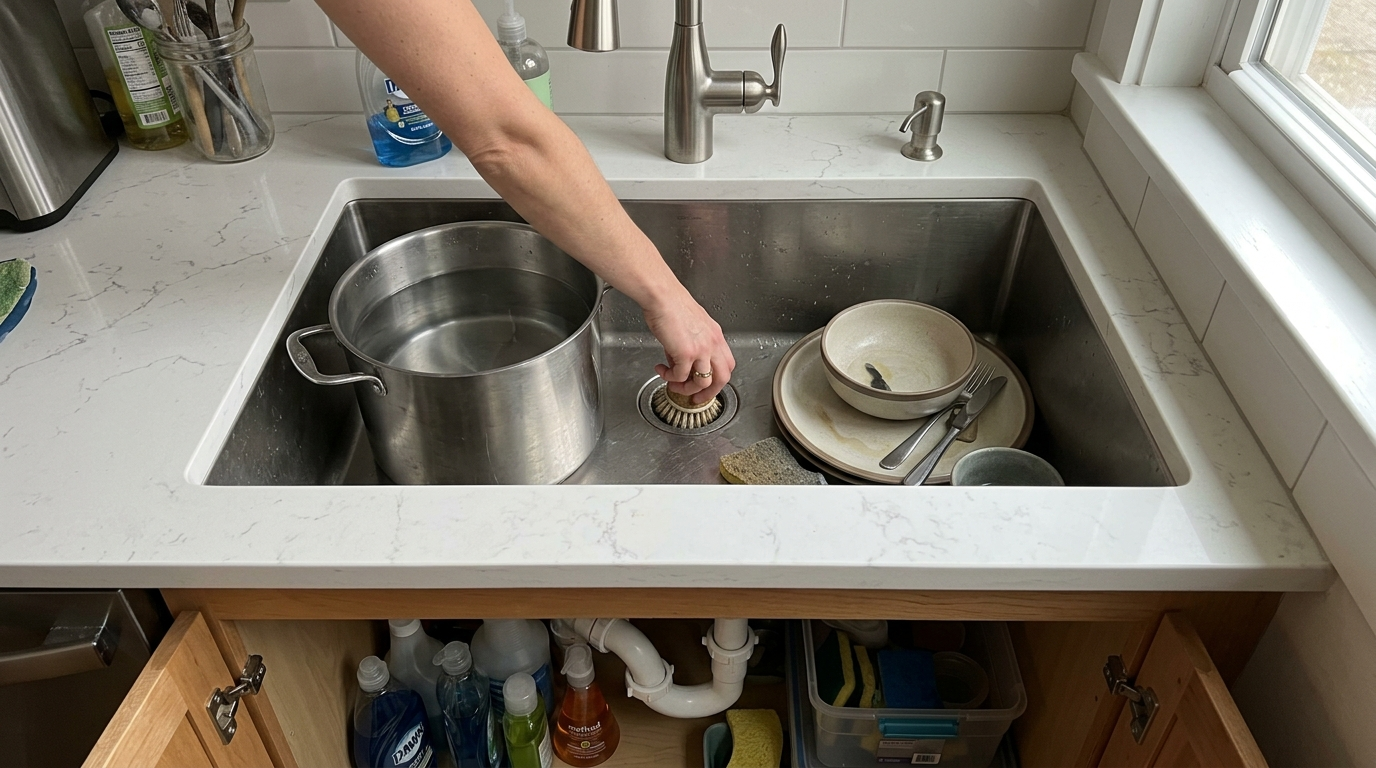
Common kitchen sink depth runs from 7 to 10 inches. Deeper sounds better, but it is not always better.
A sink that is 8 to 9 inches deep handles most residential tasks comfortably. It holds large pots, contains splashing, and still leaves reasonable under cabinet storage.
Going to 10 inches or deeper helps hide dirty dishes and makes soaking stockpots easier, but it introduces tradeoffs. Houzz warns that very deep sinks take up more under cabinet space and can be uncomfortable for shorter or taller users who have to reach down repeatedly. A deep bowl can also complicate disposal installation, under sink filtration, and pull out trash placement.
For aging in place or accessibility sensitive projects, depth matters even more. ADA related guidance references a maximum sink depth of 6.5 inches in accessible contexts, which is far shallower than most residential sinks.
Bottom line: choose depth based on the main user’s height, the under sink equipment plan, and whether soaking large items is a genuine daily need, not just a “might be nice” scenario.
7. Compare Sink Materials
Sink material is where most people start, but it should come after the fit, size, and mounting decisions are settled. The material affects weight, noise, durability, cleaning, and price. It also constrains mounting options: some materials only work with certain installation types.
Stainless Steel
The most popular kitchen sink material in the U.S. by a wide margin. Lightweight, affordable, compatible with every mounting type, and available in virtually every size and configuration.
Stainless resists heat and stains well but shows water spots and scratches more than other materials. A brushed or satin finish hides daily wear far better than a mirror polish. Practitioners on Reddit consistently recommend brushed finishes for working kitchens, calling polished stainless “a fingerprint magnet.”
The main quality variable is gauge (covered in detail in the stainless steel section below). Budget stainless sinks in 22 gauge flex noticeably and sound hollow. Spend enough to get 18 gauge or better.
Granite Composite
Granite composite sinks are made from roughly 80% crushed granite (or quartz) mixed with acrylic resin. The result is a dense, heavy sink that resists scratches, chips, and heat better than plain acrylic and comes in colors that stainless cannot match.
These sinks pair especially well with quartz or granite countertops because the color coordination opportunities are broader. Black, white, gray, and brown tones are standard.
The tradeoffs: granite composite sinks are heavier than stainless (requiring more support during undermount installation), can show white mineral deposits more than stainless, and typically cost more. Some homeowners on Reddit report that dark granite composite sinks require regular cleaning with a specific composite cleaner to prevent a chalky film from hard water buildup. Lighter colors show less mineral residue but may stain from coffee or red wine if not wiped promptly.
Still, granite composite is the second most popular residential sink material for good reason. It absorbs sound better than stainless, feels more substantial, and offers a look that blends with stone countertops rather than contrasting against them.
Fireclay
Fireclay sinks are made from clay fired at extremely high temperatures (typically above 1800°F), producing a dense, nonporous surface with a thick glaze. The material is most associated with farmhouse or apron front designs, though fireclay undermount sinks exist too.
The appeal is durability and a distinctive smooth, glossy finish that resists staining and fading. Fireclay holds up well against acidic foods, hot pans, and heavy scrubbing.
The downsides are significant for planning purposes. Fireclay sinks are heavy, often 80 to 150 pounds for a full size farmhouse model. The cabinet must be built or reinforced to handle that weight. The material can chip if a heavy cast iron pan is dropped directly onto the surface, and repairs are difficult. And because fireclay is fired in a kiln, slight dimensional variations from unit to unit are common, which means the countertop fabricator should have the actual sink on site (not just the template) before cutting.
YouTube walkthrough videos from installers frequently emphasize one point: get the fireclay sink delivered and inspected before the cabinet is set. Cracks, chips, and dimensional issues are easier to resolve before everything else is built around it.
Cast Iron
Cast iron sinks have a steel or iron core coated with a thick layer of porcelain enamel. Kohler is the most recognized manufacturer in this category. The enamel surface is smooth, easy to clean, and available in a wide range of colors.
Cast iron is extremely durable against everyday use but has two well known vulnerabilities. First, the enamel can chip from impacts (dropped pots, heavy ceramics), and once chipped, the underlying metal can rust. Second, these sinks are very heavy, often 100 pounds or more, which demands reinforced cabinet support and careful handling during installation.
Cast iron also limits mounting options somewhat. Drop in installation is straightforward. Undermount installation is possible but requires strong support brackets or a support rail system because the weight is considerable.
Reddit discussions about cast iron sinks often split into two camps: people who love the classic look and smooth wipe down surface, and people who worry about chipping the enamel. The consensus from long term owners is that chips are uncommon with normal use but nearly inevitable over 10 to 15 years if heavy cookware is used regularly.
Copper
Copper sinks are a niche choice, prized for their warm, distinctive appearance. Over time, copper develops a patina (a natural darkening and color shift) that many owners consider part of the appeal. The patina also provides a degree of antimicrobial benefit.
Copper requires more maintenance than any other common sink material. It reacts to acidic foods (citrus, tomatoes, vinegar), and the patina will change unevenly if the sink is not cleaned consistently. Most manufacturers recommend specific copper cleaners and periodic waxing.
The material is soft compared to stainless or composite, so it scratches and dents more easily. Copper sinks are typically handcrafted, which means pricing is higher and dimensions can vary. For these reasons, copper works best as a secondary or bar sink in a kitchen rather than the primary workhorse.
Practitioners on home improvement forums generally advise treating a copper sink as a design statement, not a utility choice. If low maintenance is a priority, copper is the wrong material.
Solid Surface and Other Materials
Solid surface sinks (such as Corian) can be integrated seamlessly with a solid surface countertop, eliminating the rim entirely. They scratch more easily than stone or stainless but can be repaired by sanding.
Natural stone sinks (soapstone, marble) exist but are rare and expensive. They require sealing, are heavy, and limit configuration options. These are custom luxury choices, not general recommendations.
Sink Material Comparison
| Material | Weight | Scratch resistance | Heat resistance | Noise level | Typical price range | Best for |
|---|---|---|---|---|---|---|
| Stainless steel | Light | Moderate (shows scratches) | High | Higher (without pads) | $ to $$ | Most kitchens, all mounting types |
| Granite composite | Heavy | High | High | Low | $$ to $$$ | Color matching with stone counters |
| Fireclay | Very heavy | High | High | Low | $$$ to $$$$ | Farmhouse style, high end kitchens |
| Cast iron | Very heavy | High (enamel) | High | Low | $$$ to $$$$ | Classic look, drop in installs |
| Copper | Moderate | Low | Moderate | Low | $$$$ | Bar sinks, design statements |
| Solid surface | Moderate | Low to moderate | Moderate | Low | $$ to $$$ | Seamless integrated countertops |
When pairing a sink material with stone countertops, understanding quartz vs granite differences helps narrow the combination early.
Single Bowl vs. Double Bowl Kitchen Sink: Which Should You Choose?
Choose a single bowl sink if you regularly wash large pots, sheet pans, roasting trays, or other oversized cookware. Choose a double bowl sink if you frequently wash and rinse by hand or want separate areas for different tasks. A low divide sink is a middle option that provides some separation without completely blocking large cookware.
| Your priority | Best starting configuration |
|---|---|
| Large cookware | Single bowl |
| Dishwasher does most dishwashing | Single bowl |
| Frequent hand washing | Double bowl |
| Washing and rinsing simultaneously | Double bowl |
| Large cookware plus some separation | Low divide |
| Food prep at the sink | Workstation |
| Small secondary work zone | Prep/bar sink |
8. Stainless Steel Details Worth Understanding
Since stainless steel is the most common sink material, its specs deserve a closer look.
Gauge
Gauge measures thickness, and it runs backwards: lower numbers mean thicker steel. A 16 gauge sink is thicker than 18 gauge, which is thicker than 22 gauge. For residential use, 18 gauge or better is the standard recommendation.
Reddit threads show real anxiety about the 16 vs. 18 gauge decision, especially for large single bowl workstation sinks. The practical answer: choose 16 gauge if budget allows, particularly for large sinks where flex and drumming are more noticeable. But a well built 18 gauge sink with full sound pads and a quality brushed finish can outperform a poorly designed 16 gauge sink.
Sound Deadening Pads
Pads or spray on insulation attached to the underside of the sink basin. They reduce the drumming sound of running water, clanking dishes, and disposal vibration. Good sound pads make more daily difference than the jump from 18 to 16 gauge.
Finish
A brushed or satin finish hides minor scratches and water spots far better than a mirror/polished finish. For a working kitchen sink, brushed is the safer choice.
9. The Details People Regret Ignoring
This section covers the small specs that rarely make it onto Pinterest boards but drive daily satisfaction. When learning how to choose a kitchen sink, these details matter as much as the big decisions.
Corner Radius
The curve of the inside sink corners comes in three general categories:
- Zero radius: sharp 90 degree corners for a modern, angular look
- Tight radius: slightly rounded corners that still look clean
- Standard radius: fully rounded curves
Zero radius sinks photograph beautifully. They are also harder to clean. Practitioners on Reddit repeatedly report that square corners and sink racks trap debris and require more scrubbing than expected. One user described their zero radius undermount as a “big mistake” specifically because of the cleaning effort.
Tight radius offers the best compromise: modern enough to look intentional, rounded enough to wipe clean without a brush in every corner.
Reveal Type
When an undermount sink meets the countertop, the relationship between the two edges is called the “reveal.” There are three types:
Positive reveal means a small part of the sink rim is visible below the countertop edge. It is easier to inspect and clean if the reveal is slight and consistent. A large or uneven positive reveal, however, can look like a fabrication error.
Zero reveal means the countertop edge lines up flush with the sink edge. It looks clean but requires precise fabrication. Understanding countertop edge profiles helps when discussing reveal options with the fabricator.
Negative reveal means the countertop overhangs the sink rim slightly. This hides the rim but can also hide grime underneath, creating a ledge that is difficult to see and clean.
Houzz forum discussions show heated debate among homeowners and fabricators. One fabricator argues repeatedly for a slight positive reveal, saying negative reveals create hidden crud ledges and zero reveals can expose a long silicone joint that may discolor. Other users prefer zero reveal for its sleek appearance.
The practical advice: decide reveal type with the countertop fabricator before templating. This is not a detail to discover after installation.
Drain Placement

Center drains are common, but rear or offset drains can improve under sink storage by moving the P trap and disposal toward the back wall. Consider where the disposal, pull out trash, water filter, or instant hot water tank will go before accepting the default drain position.
Rear vs. Center Drain: Which Is Better?
The drain location affects usable sink space and the layout of the cabinet below. A rear drain can create more usable space inside the bowl and may free cabinet space, while a center drain is familiar and widely used.
| Drain position | Main advantage | Consideration |
|---|---|---|
| Center | Familiar plumbing layout | P trap and disposal occupy more central cabinet space |
| Rear | More usable bowl and potentially more cabinet space | Must match the sink’s plumbing configuration |
| Offset | Can improve bowl and cabinet layout | Requires careful plumbing coordination |
Do not choose drain position in isolation. Check the disposal, P trap, water filter, instant hot system, and pull out trash layout together.
Faucet Holes
Sinks typically have one to five pre drilled holes for faucets and accessories. Before ordering, confirm that the hole count and spacing match the planned faucet, soap dispenser, filtered water tap, side sprayer, and dishwasher air gap. Unused holes can be covered with deck plates, but missing holes on a stainless sink cannot be easily added after purchase.
Air gaps are code required in many jurisdictions. They need a hole near the sink. Do not overlook this, especially with smaller sinks that may not have room for all planned accessories.
Disposal and Dishwasher Placement
For double sinks, placing the disposal on the same side as the dishwasher improves drainage efficiency. For single sinks, the drain and disposal location affect under sink storage layout. Verify these details with the plumber before finalizing the sink spec.
Avoiding these kinds of mistakes early saves significant time and money. A guide to common remodel mistakes covers the broader sequencing issues that lead to rework.
Kitchen Sink Glossary
Every term below appears on sink spec sheets, manufacturer descriptions, or fabricator conversations. Understanding them before shopping prevents expensive miscommunication.
Overall sink size: The full outside dimensions, usually length by width. Not the same as bowl size or cutout size.
Bowl size: The usable interior basin dimensions. Always smaller than overall sink size due to rim, wall thickness, and mounting hardware.
Cutout size: The countertop opening required. Comes from the manufacturer’s template. Getting this wrong in quartz or granite is costly to repair.
Minimum cabinet size: The smallest sink base cabinet width the manufacturer supports. A sink can be too large even when its advertised width sounds close to the cabinet width.
Sink base cabinet: The base cabinet designed to hold the sink and plumbing. Farmhouse sinks, oversized sinks, and heavy sinks may require special bases or modifications.
Gauge: Stainless steel thickness measurement. Lower number means thicker material. 16 and 18 gauge are common quality choices.
Sound deadening pads: Insulation under a stainless sink to reduce water drumming and disposal noise.
Radius: The curve of inside sink corners. Zero radius is square and modern but harder to clean. Tight radius is a cleaner compromise.
Reveal: How the countertop edge meets an undermount sink: positive (rim visible), zero (flush), or negative (countertop overhangs rim).
Faucet holes / tappings: Pre drilled holes in the sink deck for faucet, soap dispenser, sprayer, filtered water, or air gap.
Air gap: A countertop mounted backflow prevention fitting for the dishwasher, required by code in many areas. Needs its own hole.
Drain placement: Location of the drain opening, which affects under sink storage, disposal position, and plumbing routing.
Dual mount: A sink designed for either drop in or undermount installation. Useful when the installation method is uncertain.
Low divide: A double bowl sink with a divider roughly half the height of a conventional one. Allows large items to bridge both bowls.
Workstation sink: A sink with integrated ledges that hold accessories like cutting boards, colanders, and drying racks over the basin.
Prep sink / bar sink: A smaller secondary sink, typically 12 to 18 inches, used in islands, beverage zones, or multi cook kitchens.
Granite composite: A sink material made from crushed stone and acrylic resin, offering color variety and sound absorption superior to stainless steel.
Fireclay: A kiln fired ceramic material, dense and nonporous, commonly used in farmhouse sinks.
Cast iron: An iron or steel core with a thick porcelain enamel coating, offering a smooth surface in many colors but significant weight.
Understanding how the sink connects to the broader remodel timeline matters too. A phase by phase remodel guide explains when sink, cabinet, and countertop decisions should happen relative to demolition, plumbing, and installation.
Pre Purchase Checklist
Print this or bring it to the showroom. Every item should have an answer before the sink is ordered.
Cabinet fit:
- Sink base cabinet width (nominal)
- Cabinet interior clearance (actual)
- Framed or frameless construction
- False drawer front that may need removal
- Special farmhouse/apron front cabinet needed?
- Weight capacity confirmed for heavy materials (fireclay, cast iron)?
Countertop fit:
- Counter material (laminate, quartz, granite, solid surface, butcher block)
- Existing cutout staying or new fabrication?
- Undermount support confirmed?
- Reveal type chosen (positive, zero, negative)?
- Fabricator has the sink or template?
Sink specs:
- Overall sink dimensions (L x W)
- Bowl interior dimensions
- Minimum cabinet size per manufacturer
- Cutout template obtained
- Sink depth
- Sink shape (rectangular, D shaped, square)
- Bowl configuration (single, double, low divide, workstation)
- Material and finish
- Gauge (if stainless)
- Sound deadening pads included?
- Corner radius
Accessories and plumbing:
- Faucet hole count and spacing
- Faucet reach and height (clears window/backsplash?)
- Soap dispenser hole
- Filtered water tap hole
- Instant hot tap hole
- Dishwasher air gap hole
- Disposal side confirmed
- Dishwasher location relative to sink
- Drain location (center, rear, offset)
- Under sink filtration or hot water tank clearance
- Pull out trash clearance
- Sink grid or bottom protector
- Workstation accessories (if applicable)
- Cleaning instructions reviewed (especially for copper, granite composite, fireclay)
- Warranty reviewed
Final confirmation:
- Fabricator or installer has approved all specs
- Sink is on site or ordered before countertop templating
For Washington area remodels, bringing this checklist to a Seattle area showroom where cabinets, counters, sinks, and faucets can be coordinated in person reduces the chance of ordering mismatches.
Frequently Asked Questions
What size kitchen sink fits a 36 inch cabinet?
A 33 x 22 inch sink is a common match for a 36 inch base cabinet. The general rule is that the sink should be about 3 inches smaller than the cabinet width. Always check the manufacturer’s minimum cabinet size and measure the cabinet interior clearance before ordering.
Is a single bowl or double bowl kitchen sink better?
Single bowl is better for large cookware, sheet pans, and households with a dishwasher. Double bowl is better for hand washing, soaking, and separating prep from cleanup. If torn between them, a low divide sink offers task separation without blocking large items.
Is undermount better than drop in?
Undermount is easier to wipe into and looks cleaner with quartz, granite, or solid surface countertops. Drop in is easier and cheaper for sink only replacements and laminate counters. The “better” choice depends entirely on the countertop material and project scope.
What stainless steel gauge should I choose for a kitchen sink?
Choose 16 or 18 gauge for residential use. Lower gauge means thicker metal, which reduces flex, denting, and noise. For large single bowl or workstation sinks, 16 gauge is worth the upgrade. A well built 18 gauge sink with good sound pads is also a solid choice.
What is the best kitchen sink material?
There is no single best material. Stainless steel suits most kitchens and budgets. Granite composite works well for homeowners who want color options and a quieter basin. Fireclay is the go to for farmhouse aesthetics. Cast iron offers a classic enamel surface in many colors. Copper is a design statement, not a utility pick. Match the material to your countertop, cooking habits, and maintenance tolerance.
Are granite composite sinks durable?
Yes. Granite composite resists scratches and heat better than stainless steel and absorbs sound well. The main maintenance issue is hard water deposits, which show more on dark colors and require periodic cleaning with a composite specific product. Lighter colors may stain from prolonged contact with dark liquids.
Do fireclay sinks chip easily?
Not under normal use. Fireclay is quite hard and handles daily wear well. However, dropping a heavy cast iron pan directly onto the surface can chip the glaze, and those chips are difficult to repair. Handle heavy cookware carefully and inspect the sink thoroughly before installation, since kiln fired products occasionally arrive with hairline defects.
Are cast iron sinks still a good choice?
Cast iron sinks remain popular for their smooth enamel finish, color range, and classic appearance. The enamel can chip over many years of heavy use, and the sinks are very heavy (often over 100 pounds), so cabinet reinforcement and careful installation are required. They are a strong choice for homeowners who value aesthetics and are willing to handle the weight constraints.
Are workstation sinks worth it?
Worth it if the household preps food at the sink daily or has limited counter space. Less useful if the accessories will mostly live in a drawer. Before buying, check the ledge design, accessory material, drain placement, and whether the bottom working area is as large as the advertised top dimension.
Are zero radius sinks hard to clean?
They can be. The sharp 90 degree corners trap food particles and require more scrubbing. Tight radius corners usually offer a better balance of modern appearance and easier daily maintenance.
When should I choose the sink during a kitchen remodel?
Before countertop templating, and ideally before final cabinet ordering if a farmhouse or oversized sink is planned. The sink spec affects the cabinet selection, cutout, faucet holes, disposal placement, and plumbing rough in. Late sink decisions are one of the most common causes of remodel delays and rework. A remodel checklist helps track these dependencies.
How do I choose between positive, zero, and negative reveal for an undermount sink?
Decide with the countertop fabricator before templating. A slight positive reveal is easier to inspect and clean. Zero reveal looks sleek but requires precise fabrication. Negative reveal hides the rim but can trap grime underneath. There is no universal best answer. The fabricator’s recommendation for the specific sink and counter material matters most.
When ready to coordinate cabinet, countertop, and sink selections for a remodel, review Washington cabinet costs to budget accurately across the full project.