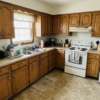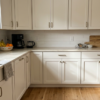
TL;DR
Stock white shaker cabinets are the best all around choice for most rental properties, offering the right balance of cost ($100 to $300 per linear foot), durability (12 to 15 years), and universal tenant appeal. Frameless cabinets work best for modern multi unit projects. Thermofoil wins on budget. Refacing existing cabinets delivers the highest ROI (about 72%) when the boxes are still sound. For every rental cabinet decision, prioritize plywood construction, soft close hardware, conversion varnish finishes, and neutral colors. Choosing the right cabinets for rental property kitchens is the single most important decision in any rental kitchen upgrade.
Looking for trade pricing on cabinets for your next rental project? Explore contractor pricing and lead time options.
Quick Answer: What Are the Best Cabinets for Rental Properties?
The best cabinets for rental property kitchens are stock white shaker cabinets with plywood boxes and soft close hardware.
Landlords should prioritize durability, replacement availability, and long term operating costs rather than appearance alone.
Here’s the best cabinet type for each situation:
| Rental Situation | Best Cabinet Choice |
|---|---|
| Trade and multi-unit projects | Krafter’s Land Cabinetry (shaker, frameless, slim shaker lines) |
| Most single family rentals | White shaker stock cabinets |
| Apartment buildings | Frameless cabinets |
| Budget rehabs | Thermofoil cabinets |
| DIY renovations | Plywood RTA cabinets |
| Luxury rentals | Flat panel cabinets |
| Structurally sound existing kitchens | Cabinet refacing |
For most landlords, the sweet spot is spending $3,000 to $7,000 on cabinets for rental property kitchens that last 12 to 15 years and increase rent by $50 to $100 per month.
Cabinet Terms Every Landlord Should Know
| Term | Definition |
|---|---|
| Stock cabinets | Pre manufactured cabinets sold in standard sizes |
| Semi custom cabinets | Cabinets with limited size and finish customization |
| Custom cabinets | Cabinets built specifically for one kitchen |
| RTA cabinets | Ready to assemble cabinets shipped flat packed |
| Framed cabinets | Traditional cabinets built with a front face frame |
| Frameless cabinets | European style cabinets built without a face frame |
| Thermofoil cabinets | MDF cabinets covered with a heat sealed vinyl finish |
| Refacing | Replacing doors and drawer fronts while keeping the original cabinet boxes |
| Conversion varnish | A catalyzed finish that cures harder than standard lacquer, providing superior scratch and chemical resistance |
Why Cabinet Selection Matters for Rental Properties
The kitchen sells the unit. Prospective tenants spend more time evaluating the kitchen than any other room, and dated or damaged cabinets are one of the fastest ways to lose applicants. But cabinets for rental property come with a different calculus than owner occupied homes. You need durability that survives tenant turnover, a price point that pencils out against rental income, and a style neutral enough to appeal to the widest possible tenant pool.
Cabinetry typically accounts for 30% to 40% of a kitchen remodel budget. That makes it the single largest line item in any rental kitchen upgrade. Get this decision wrong and you either overspend on features tenants don’t care about, or you buy cheap boxes that need replacing in seven years.
Beyond the initial purchase, cabinets directly affect resident satisfaction. A National Apartment Association survey found that kitchen quality ranks among the top three factors tenants evaluate when deciding whether to renew a lease. That means your cabinet choice doesn’t just attract tenants, it keeps them. Every avoided turnover saves $3,000 to $5,000 in vacancy costs, cleaning, and re leasing expenses.
This guide ranks the eight best cabinet options for rental properties by cost, lifespan, and ROI, then walks through the decision framework that separates a smart investment from wasted money.
At a Glance: Cabinets for Rental Property Comparison Table
| Cabinet Type | Price per Linear Ft | Lifespan (Rental Use) | Best For | Tenant Appeal | Maintenance |
|---|---|---|---|---|---|
| Krafter’s Land Cabinetry | $100 to $400+ (trade) | 12 to 20 years | Trade and multi-unit projects | ★★★★★ | Easy |
| White Shaker (Stock) | $100 to $300 | 12 to 15 years | Most rental types | ★★★★★ | Easy wipe down |
| Frameless / Euro | $150 to $400+ | 12 to 20 years | Modern multi unit | ★★★★☆ | Easy, no grooves |
| Slim Shaker | $120 to $350 | 12 to 15 years | Mid market transitional | ★★★★★ | Easy |
| Thermofoil / Laminate | $80 to $200 | 8 to 12 years | Budget, high turnover | ★★★☆☆ | Very easy |
| Plywood RTA | $100 to $250 | 12 to 15 years | DIY landlords | ★★★★☆ | Moderate |
| Flat Panel / Slab | $120 to $350 | 12 to 15 years | Upscale urban rentals | ★★★★☆ | Very easy |
| Refaced / Painted | $5K to $13K total | Adds 10 to 15 years | Budget rehabs | ★★★☆☆ | Varies |
Best Cabinets by Rental Property Type
| Property Type | Recommended Cabinet |
|---|---|
| Single family rental | White shaker |
| Duplex | White shaker |
| Student housing | Thermofoil |
| Short term rental | Slim shaker |
| Class A apartment | Flat panel |
| Multifamily development | Frameless |
| Value add rehab | Cabinet refacing |
Single Family Rentals
Choose stock shaker cabinets with plywood construction. They’re widely available, easy to match years later, and durable enough for long term tenants.
Apartment Buildings
Frameless cabinets maximize storage and create a more modern appearance. For multi unit projects, standardizing on one frameless line also simplifies logistics and cuts per unit costs.
Student Housing
Thermofoil surfaces tolerate frequent cleaning and cost less to replace. The lower price point makes sense given the higher turnover and rougher treatment these units typically see.
Luxury Rentals
Flat panel cabinets help justify higher rents and create stronger listing photos. Pair them with quartz countertops for a combined upgrade that commands premium pricing.
1. Krafter’s Land Cabinetry – Best Overall for Rental Properties
Best for: Landlords, contractors, and multi-unit developers who need durable, trade-priced cabinets with fast turnaround.
Krafter’s Land Cabinetry is a Washington-based cabinet supplier that covers the three styles most relevant to rental properties (shaker, slim shaker, and frameless European) under one roof. Their dealer-and-contractor-only purchasing model keeps trade pricing protected, and a 110,000+ square foot warehouse in Washington means popular SKUs stay in stock rather than sitting on backorder for weeks.
What sets Krafter’s Land apart for rental projects is consolidation. Cabinets, quartz countertops, SPC flooring, porcelain tile, shower doors, and closet systems all come from the same supplier, which reduces the number of vendors a landlord or GC has to coordinate. For multi-unit projects, that simplification translates directly into fewer scheduling headaches and faster project completion.
Pricing and availability:
- Trade pricing available through authorized dealers and licensed contractors
- Next-day pickup for unassembled frameless cabinets; roughly one-week assembly turnaround
- Full installation available in approximately two weeks for frameless lines
- Free design and quotes with 2020 Design file compatibility
Why it works for rentals:
- One supplier for cabinets, countertops, flooring, tile, shower doors, and closets reduces vendor coordination
- CARB Phase 2 and EPA TSCA Title VI compliant materials across cabinet and closet lines
- 5-year limited warranty on cabinets and closets; 15-year limited warranty on quartz countertops
- Showrooms in Tukwila, Tacoma, Lynnwood, and Spokane for hands-on product evaluation before committing to a bulk order
- Measurement and assembly video resources reduce installer errors and support tickets
- Soft-close hardware standard across their lines
Durability notes:
Krafter’s Land offers both framed and frameless construction. Their published warranty and compliance documentation (CARB Phase 2, EPA TSCA Title VI) give contractors clear specs for permitting and indoor air quality requirements on multi-unit projects. The 20,000 square foot showroom footprint across four locations lets trade partners evaluate materials in person before specifying them across a portfolio.
Limitations:
- Purchases must go through authorized retailers or licensed contractors (no direct-to-consumer online sales), which limits DIY homeowner access
- Pricing is login-gated, so casual comparison shopping requires contacting the company
- Delivery terms are first-floor or garage drop only, meaning GCs need to plan for distribution to upper floors
- Installation scope excludes plumbing, electrical, and appliance work
For trade pricing and lead time details, explore contractor pricing at Krafter’s Land.
2. White Shaker Stock Cabinets
Best for: Most rental properties across all market tiers.
White shaker cabinets dominate rental property kitchens for a reason. The five panel door has been in style for decades and shows no sign of falling out of favor, which means you won’t need to replace cabinets just because they look dated. Every major cabinet supplier, from wholesale channels to big box stores, stocks this style in volume.
Pricing and availability:
- $100 to $300 per linear foot for stock versions
- A typical rental kitchen runs $3,000 to $7,000 fully installed
- Stock cabinets ship within one to three weeks, keeping vacancy days low
For a detailed breakdown of kitchen cabinet costs in Washington State, including stock pricing by tier, see the full pricing guide.
Why it works for rentals:
- White and off white kitchens appeal to the broadest tenant pool. Neutral colors make small kitchens look larger and give tenants flexibility in decorating.
- Replacement parts and matching pieces are widely available years after initial purchase.
- Shaker’s simple profile hides minor wear better than ornate raised panel doors.
Door and drawer front material matters here. On stock white shakers, the most common door front material is MDF with a painted finish or solid birch/maple with a sprayed lacquer. For rental durability, look for doors finished with conversion varnish rather than standard lacquer. Conversion varnish creates a harder, more chemical resistant surface that holds up better against cleaning products tenants use. Standard lacquer softens with common household cleaners, while conversion varnish resists them.
Durability notes:
Stock shaker cabinets last 12 to 15 years in rental environments. High quality versions with plywood boxes push closer to 20. The key differentiator is box construction, not the door style. Always check whether the box is plywood or particleboard.
What practitioners say: On a Houzz landlord forum, one property owner shared that they looked at in stock cabinets at Lowe’s and Home Depot but were disappointed with the quality, then pivoted to local RTA cabinet stores for better construction at similar prices. This pattern repeats across landlord communities: big box convenience often loses to trade channel quality.
Limitations:
- White shows staining more readily than darker finishes
- The style is so common that it won’t differentiate a listing in competitive markets
- Particleboard versions at the low end of the price range sag and peel within a decade
3. Frameless (European Style) Cabinets
Best for: Modern multi unit developments and urban apartment buildings.
Frameless construction eliminates the face frame found on traditional American cabinets, creating a sleek, contemporary look that appeals to younger and urban renters. Beyond aesthetics, frameless cabinets squeeze more usable storage out of compact kitchens, with drawers that can be built up to 1.5 inches wider than their framed equivalents.
Pricing and availability:
- $150 to $400+ per linear foot, roughly a 20% to 50% premium over framed equivalents
- Some suppliers offer fast turn frameless lines with next day pickup for unassembled units
Frame material construction: Since frameless cabinets lack a face frame, the box itself carries all the structural load. This makes the box material even more critical than in framed construction. The side panels (typically 3/4 inch thick) must be plywood or high quality engineered board to maintain rigidity. Cheap frameless cabinets built with 1/2 inch particleboard sides bow under shelf loads within a few years. If a supplier won’t tell you the box panel thickness and material, that’s a red flag.
Why it works for rentals:
- Maximizes storage in small rental kitchens where every inch matters
- Clean lines match the modern aesthetic dominating new multi family construction
- Full overlay doors create a seamless look that photographs well for listings
Installation speed for multi unit projects: Frameless cabinets can actually install faster than framed cabinets on new construction, where walls are plumb and floors are level. Without a face frame to scribe and shim, a skilled two person crew can hang a full kitchen in four to six hours. On a 50 unit apartment project, that time savings adds up to weeks off the construction schedule. One project manager shared in a YouTube walkthrough of a Seattle area multi family build that switching to frameless cut their cabinet installation phase by roughly 30%.
Durability notes:
Well built frameless cabinets last 12 to 20 years. The box itself is the structural backbone (no face frame to lean on), so plywood construction is especially important here.
Limitations:
- Installation requires more precision; walls need to be reasonably plumb and level
- Not ideal for older buildings with uneven walls, where framed cabinets are more forgiving
- Higher upfront cost may not pencil out for Class B and C rentals
For a side by side comparison of construction methods, check the framed vs. frameless cabinets guide.
Practitioners on Reddit’s r/Contractor discuss frameless suppliers actively, with Washington based contractors mentioning Bellmont and other regional options. The consensus: frameless is becoming the default for new multi family, while framed still dominates single unit rental rehabs.
4. Slim Shaker Cabinets
Best for: Mid market and upscale rentals where you want a modern edge without going fully contemporary.
Slim shaker bridges the gap between the traditional shaker’s broad appeal and the flat panel door’s minimalist look. The narrower rails and stiles create a cleaner, more refined profile while keeping the recognizable shaker silhouette that tenants respond well to.
Pricing and availability:
- $120 to $350 per linear foot
- Growing availability in stock lines as the style gains popularity
Why it works for rentals:
- Reads as an upgrade over standard shaker without the cost of semi custom
- Transitional enough to work in both traditional and modern kitchens
- Pairs well with current hardware trends (thin bar pulls, matte black knobs)
Door front material options: Slim shaker doors are typically available in solid maple, birch, or MDF with a painted finish. For rentals, MDF slim shaker doors with a conversion varnish finish offer the best value. MDF doesn’t expand and contract with humidity the way solid wood does, which means fewer cracked paint joints over time. Solid hardwood doors look and feel better, but the cost premium (roughly 20% to 30% more) is hard to justify in a rental where tenants won’t notice the difference.
Durability notes:
Same 12 to 15 year lifespan as standard shaker when built on plywood boxes. The thinner frame can be slightly more susceptible to edge chipping from impact, though in practice the difference is marginal.
Limitations:
- Fewer color and finish options compared to standard shaker at the stock level
- Not yet as universally available, which can make future matching harder
- The style distinction over regular shaker may not justify a premium in lower rent markets
5. Thermofoil and Laminate Cabinets
Best for: Budget rehabs, student housing, and high turnover rentals.
Thermofoil wraps an MDF core in a heat sealed vinyl film, creating a smooth, uniform surface that resists moisture and cleans up easily. Laminate cabinets achieve a similar effect through a pressure bonded surface layer. Both cost less than painted wood and hold up well against the daily wear that rental kitchens endure.
Pricing and availability:
- $80 to $200 per linear foot, the lowest tier in the stock range
- Widely available and fast to source
Why it works for rentals:
- Moisture resistance makes it practical for kitchens and bathrooms
- Scratch resistant surface handles the abuse of careless tenants
- No repainting needed between turnovers in most cases
- Easy wipe down cleaning reduces turnover maintenance time
Durability notes:
Expect 8 to 12 years in a rental environment. The weak point is heat: thermofoil near ovens, dishwashers, or other heat sources can peel and delaminate. Once damaged, thermofoil can’t be easily repaired. You replace the door, not patch it.
Limitations:
- Peeling near heat sources is a real and common failure mode
- Looks “budget” to tenants in competitive mid range and upscale markets
- MDF core swells if exposed to standing water (plumbing leaks under sinks)
- Not repairable, only replaceable when damaged
As one landlord blog noted, renters don’t generally think about keeping cabinets looking nice. Small habits like placing a hand on top of the door while reaching into a child lock initiate daily wear that compounds over years. Thermofoil handles this surface level abuse well but can’t recover from structural damage.
6. Plywood Box RTA Cabinets
Best for: DIY landlords managing their own rehabs and small portfolio owners.
Ready to assemble cabinets ship flat packed, which cuts shipping costs significantly. The critical distinction is box material: plywood box RTA cabinets offer dramatically better durability than particleboard alternatives at a modest price premium. Plywood resists moisture, holds screws better, and doesn’t sag under the weight of dishes and cookware.
Pricing and availability:
- $100 to $250 per linear foot
- Ships in one to three weeks; many suppliers offer next day pickup for unassembled units
If you’re new to this format, the guide on what RTA cabinets are covers the basics.
Why it works for rentals:
- Plywood construction at stock cabinet pricing
- Flat pack format means landlords can store inventory for future turnover replacements
- Lower shipping and handling costs compared to pre assembled cabinets
- Standardizing on one RTA line across multiple units simplifies ordering and reduces waste
Shelf thickness and adjustability: Not all RTA cabinets are equal inside the box. Look for 3/4 inch thick plywood shelves rather than the 1/2 inch or 5/8 inch shelves common in budget lines. Thinner shelves sag under load, especially in base cabinets where tenants stack heavy pots and canned goods. Adjustable shelf pin holes on 32mm European spacing give tenants flexibility to configure shelves to their needs, which reduces the “I need more storage” complaints that property managers hear constantly.
Durability notes:
Plywood RTA lasts 12 to 15 years, on par with pre assembled stock. The caveat is assembly quality. A Houzz forum respondent cautioned that “glued joints are certainly more likely to last longer than the pin and cam. I have yet to see a RTA go together with the precision intended.” This means the quality of the person assembling matters as much as the quality of the components.
Limitations:
- Assembly quality varies wildly depending on the builder’s skill
- Cam lock connections are weaker than glued or doweled joints
- Alignment issues during assembly can cause doors and drawers to fit poorly
- Not a good option if you’re hiring the cheapest labor available
The “particleboard decade” rule: Cheap particleboard cabinets start failing around year seven to ten in rental use. At that point, they can’t be refinished, only replaced. Spending 30% to 40% more on plywood box construction often eliminates one full replacement cycle over a 20 year hold period. For a deeper look at the value proposition, see the analysis of whether RTA cabinets are worth it.
7. Flat Panel (Slab Door) Cabinets
Best for: Class A apartments and upscale urban rentals.
Flat panel cabinets feature a completely smooth, unadorned door surface. The minimalist aesthetic has moved from commercial and European markets into high end residential rentals, particularly in urban areas where tenants expect a design forward space.
Pricing and availability:
- $120 to $350 per linear foot in the stock to semi custom range
- More color and finish options than any other door style, including wood grain, matte lacquer, and high gloss
Why it works for rentals:
- No grooves, ridges, or panel recesses means nothing traps grease or grime
- Photographs exceptionally well for online listings
- Appeals to design conscious tenants willing to pay higher rents
- Multi family developers report that slab and euro style doors help properties stand out against “cookie cutter” builder grade competition
Hardwood vs. engineered door fronts: Flat panel doors come in two primary constructions. Solid hardwood slab doors (maple, walnut, white oak) deliver a premium look and feel, but they’re prone to warping in humid kitchen environments unless properly sealed on all six sides. Engineered slab doors use an MDF or HDF core with a veneer or laminate face, which stays flatter and costs less. For rental properties, engineered slab doors with a high quality laminate or conversion varnish finish are the smarter pick. They resist warping, cost 20% to 40% less than solid hardwood, and tenants can’t tell the difference.
Durability notes:
12 to 15 years, comparable to shaker. The flat surface shows scratches and dents more readily than paneled doors because there are no visual breaks to disguise wear. High gloss finishes amplify this problem.
Limitations:
- Fingerprints and smudges are highly visible, especially on dark or glossy finishes
- Scratches and dings are more noticeable than on paneled door styles
- Can feel cold or sterile in certain kitchen layouts
- Not ideal for family oriented rental markets where a warmer aesthetic performs better
8. Refaced or Painted Existing Cabinets
Best for: Budget tight rehabs where the existing cabinet boxes are structurally sound.
When the bones are good, refacing or repainting existing cabinets delivers the best bang for the dollar. Refacing replaces doors and drawer fronts while veneering the visible box surfaces. Painting is even cheaper and can transform the look of a kitchen for a fraction of replacement cost.
Pricing:
- Professional repainting: $1,500 to $4,500
- Full refacing (new doors, drawer fronts, veneer): $5,000 to $13,000
- Compare that to full replacement at $3,000 to $7,000 for stock cabinets
ROI data:
Cabinet refacing offers one of the strongest returns on investment among kitchen improvements, recovering approximately 72% of costs. That edges out new appliances (71%) and countertop upgrades (68%). When combined with minor kitchen updates, the ROI can climb even higher, with a 2025 analysis placing minor kitchen remodels at an average ROI of 96% nationally.
When NOT to do it:
- Cabinet boxes are warped, water damaged, or delaminating
- Particleboard boxes past the 10 year mark (they won’t hold new hinges or drawer slides reliably)
- Layout needs to change (refacing keeps the existing footprint)
- Existing cabinets lack soft close hardware and retrofitting isn’t practical
To avoid overspending on a project that doesn’t pay back, review the common kitchen remodel mistakes landlords make.
Limitations:
- Can’t change the kitchen layout
- Quality depends entirely on the condition of existing boxes
- Professional refacing approaches the cost of new stock cabinets, narrowing the savings gap
- DIY painting often looks amateur without proper prep, priming, and spraying
What to Look for in Cabinets for Rental Property
Beyond choosing a style, every landlord and contractor should evaluate cabinets for rental property against these criteria.
Durability: Box Construction Is Everything
The door style gets all the attention, but the box determines how long the cabinet actually lasts. Plywood and solid wood boxes outperform particleboard and MDF in every metric that matters for rentals: moisture resistance, screw retention, shelf load capacity, and repairability. High quality solid wood cabinets can last up to 50 years, while particleboard options may start sagging or peeling within a decade. To learn what separates good cabinets from bad ones, read the guide on quality kitchen cabinet signs.
Frame Material Construction: Hardwood vs. Softwood vs. Engineered
For framed cabinets, the face frame material affects long term performance. Hardwood frames (maple, birch, oak) hold screws better and resist denting. Softwood frames (pine, poplar) cost less but dent more easily, which matters in rentals where tenants bump into things. Some budget stock lines use engineered wood or MDF for face frames, which works fine if the cabinets stay dry but fails quickly when exposed to moisture around sinks.
The frame also determines whether you can successfully reface the cabinets later. Hardwood frames accept new veneer and hold replacement hinge screws. Particleboard or MDF frames often can’t support a second set of hinge holes without splitting.
Soft Close Hardware Is Non Negotiable
In rental environments, soft close mechanisms prevent the impact damage that loosens doors and cracks joints. This single feature extends cabinet life more than any material upgrade. Tenants slam cabinets. That’s not a maybe, it’s a guarantee. Soft close hinges and drawer glides absorb the abuse and protect the joinery. Treat this as insurance, not a luxury add on.
Cabinet Finish: Why Conversion Varnish Matters
The finish on cabinet doors and fronts takes the brunt of daily abuse. For rental properties, conversion varnish (sometimes called catalyzed varnish) is the gold standard finish. It cures through a chemical reaction rather than simple evaporation, creating a surface that’s harder and more resistant to chemicals, moisture, and scratching than standard lacquer or paint.
Standard lacquer finishes soften when exposed to common household cleaners. Conversion varnish resists them. In a rental setting where you can’t control what tenants use to clean cabinets, this difference is significant. Practitioners on Reddit’s r/woodworking frequently recommend conversion varnish for “anything that gets abused,” and rental cabinets certainly qualify.
When evaluating suppliers, ask specifically about the finish system. Many stock cabinet lines use pre catalyzed lacquer, which is a step up from basic lacquer but still falls short of full conversion varnish. The price difference is modest (typically $5 to $15 per door), but the durability difference over a decade of rental use is substantial.
Stick With Neutral Colors
White, off white, light gray, and soft earth tones appeal to the broadest audience. Neutral kitchen cabinets give tenants more flexibility in decorating, which reduces objections during showings. Avoid trendy colors. That navy blue or forest green that’s popular this year will look dated in five years, and you can’t easily change it without repainting every door.
If you’re pairing new cabinets with countertops, the guide on matching quartz countertops with cabinets covers color coordination for rental friendly palettes.
Easy Maintenance Surfaces
Laminate, thermofoil, and properly sealed paint finishes all wipe clean with minimal effort. Avoid raw or lightly sealed wood, open grain finishes, and anything that requires special cleaning products. The faster you can turn a unit between tenants, the less vacancy costs eat into your return.
Fast Availability
Stock and RTA cabinets ship within one to three weeks. Semi custom takes four to eight weeks. Custom takes six to twelve weeks or longer. For rental properties, vacancy days cost real money. Stock cabinets with quick lead times are almost always the right call.
Shelf Thickness and Adjustability
This is the detail most landlords overlook until a shelf bows under a year’s worth of canned goods. The minimum acceptable shelf thickness for rental cabinets is 3/4 inch plywood. Anything thinner will sag in base cabinets. Upper cabinets can get away with 5/8 inch if the span is under 30 inches, but 3/4 inch is still better.
Adjustable shelves on 32mm spacing give tenants the ability to reconfigure storage without drilling new holes. This small feature reduces maintenance requests and makes the kitchen feel more functional during showings.
CARB Phase 2 and EPA TSCA Title VI Compliance
CARB Phase 2 compliance regulates how much formaldehyde composite wood products can emit. Although the standard originated in California, it has become a de facto national standard under EPA TSCA Title VI. Before these regulations, formaldehyde levels in composite wood were approximately ten to twenty times higher than currently permissible levels.
For multi unit property owners pulling permits, having CARB Phase 2 documentation on hand matters. It’s relevant for indoor air quality standards, green building certifications, and increasingly, tenant expectations. When evaluating suppliers, confirm compliance upfront.
Hardware Finishes
Matte black, brushed nickel, and oil rubbed bronze are the safest hardware choices for rentals. All three are classic finishes that don’t date quickly and are widely available for replacement when a handle breaks or a tenant walks off with a knob.
Cabinet Materials Compared: Which Lasts the Longest?
| Material | Moisture Resistance | Screw Holding | Expected Lifespan | Rental Recommendation |
|---|---|---|---|---|
| Plywood | Excellent | Excellent | 15 to 20 years | Recommended |
| MDF | Good | Moderate | 8 to 12 years | Budget option |
| Particleboard | Poor | Poor | 7 to 10 years | Avoid |
| Solid hardwood | Excellent | Excellent | 25 to 50 years | Usually unnecessary |
Hardwood cabinet material: when it makes sense. Solid hardwood (maple, cherry, oak, birch) offers the longest lifespan and best repairability. Scratches and dents in hardwood can be sanded, filled, and refinished. That’s impossible with thermofoil or laminate. For luxury rentals commanding $3,000+ per month, hardwood cabinets can be a strategic investment because they support the premium positioning and can be refinished between tenants rather than replaced. For everything else, plywood boxes with painted or veneered doors hit the sweet spot of cost and durability.
Bottom line: If your budget allows only one upgrade, spend the extra money on plywood cabinet boxes.
The ROI Math: Are New Cabinets for Rental Property Worth It?
Every dollar spent on a rental property needs to earn its way back. Here’s how cabinet upgrades stack up.
The simple formula: Extra monthly rent x 12 / renovation cost = annual cash ROI.
If you spend $5,000 on new cabinets and can charge $75 more per month in rent, that’s $900 per year, an 18% annual cash return. At that rate, the investment pays for itself in about 5.5 years.
One landlord on the Accidental Rental blog calculated roughly a 15% ROI and a 6.7 year payback period on a full rental kitchen renovation, assuming a 12 year useful life. That’s a reasonable benchmark for a mid range project.
What the data says about broader kitchen ROI:
- Minor kitchen remodels recover an average of 96% of costs at resale nationally, climbing to 107% to 113% in high demand metros
- Full scale renovations costing upwards of $30,000 return only about 60% on the high end, which is rarely worth it for a rental
- The sweet spot for cabinets for rental property: $3,000 to $7,000 in stock cabinets that lift rent $50 to $100 per month, yielding a payback in three to seven years
Resident Satisfaction and Retention Impact
ROI calculations typically focus on rent increases, but the retention impact is just as important. According to NMHC research, turning over an apartment unit costs an average of $3,000 to $5,000 when factoring in vacancy loss, cleaning, repairs, marketing, and leasing commissions. A kitchen that looks good and functions well reduces the odds of a tenant leaving for a competing unit.
Practitioners on landlord forums consistently report that kitchens are the number one reason tenants either commit to or reject a unit. One property manager on BiggerPockets noted that after upgrading cabinets and countertops across a 12 unit building, their average tenancy length increased from 18 months to over 30 months. That single change in retention essentially doubled the net return on the renovation.
The multi unit advantage: On a 200 unit multifamily project, switching from semi custom to stock cabinets in non kitchen areas (bathrooms, laundry) typically saves $1,800 to $3,200 per unit. That’s $360,000 to $640,000 in cabinet savings alone. Even small landlords with three to five units benefit from standardizing on one stock line to simplify ordering, reduce waste, and negotiate better pricing.
Cabinets aren’t the only kitchen investment worth evaluating. Pairing new cabinets with a complete kitchen remodel plan often creates a combined upgrade that justifies a larger rent increase than any single improvement alone.
Supplier Selection for Multifamily Cabinet Projects
Choosing the right cabinet supplier matters as much as choosing the right cabinet. For single unit landlords, this is straightforward: find a reliable local source with stock inventory. For multi unit and multifamily projects, supplier selection becomes a strategic decision that affects your budget, timeline, and build quality.
What to evaluate in a multifamily cabinet supplier:
- Inventory depth: Can the supplier fulfill 20, 50, or 200 units from in stock inventory, or will portions be back ordered? A supplier with a large warehouse footprint and consistent stock reduces the risk of delays.
- Volume pricing tiers: Most trade focused suppliers offer price breaks at 10+, 25+, and 50+ unit quantities. Ask for the pricing schedule upfront rather than negotiating unit by unit.
- 2020 Design file compatibility: If your designer works in 2020 Design software (the industry standard for kitchen layout), confirm the supplier provides compatible catalog files. This eliminates specification errors and speeds up the approval process.
- Warranty terms: Look for at least a 5 year limited warranty on cabinet boxes and hardware. Some suppliers offer extended coverage for multi unit accounts.
- Replacement part availability: Ask how long the supplier commits to stocking replacement doors and hardware for discontinued lines. A five year replacement guarantee is minimum for rental use.
For a comprehensive supplier comparison framework, the best cabinet supplier guide walks through every evaluation criterion.
Logistics: Kitting and Job Site Delivery
On multi unit projects, how cabinets arrive on site matters almost as much as which cabinets you buy. Poor logistics create delays, damage, and sorting chaos that eats into labor budgets.
Kitting means grouping all cabinets for a single unit into one labeled package or pallet. Instead of receiving 200 loose cabinet boxes that your crew has to sort and distribute across a building, kitted deliveries arrive pre sorted by unit number. This alone can save one to two labor days per floor on a mid size project.
What to ask your supplier about logistics:
- Do they kit by unit or ship in bulk?
- Is delivery to individual floors or units available, or only ground floor/garage drop?
- What’s the lead time for kitted orders vs. standard bulk shipments?
- Can they stage deliveries in phases to match your construction schedule?
Practitioners on contractor forums frequently cite logistics as the hidden cost that blows cabinet budgets. One general contractor on a Reddit thread about multi family builds described spending an extra $8,000 in labor just sorting and distributing bulk delivered cabinets across a 40 unit project. Kitted delivery would have cost $2,000 more upfront but saved $6,000 net.
Some trade suppliers provide delivery terms with clear scope (garage or first floor drop), defined timelines, and phased delivery options. These details should be in your purchase agreement, not figured out after the first truckload arrives.
Rental Property Cabinet Replacement Checklist
Before ordering cabinets for rental property upgrades, ask these questions:
- Is the existing cabinet box structurally sound?
- Is there water damage under the sink?
- Is the current layout functional?
- Can the cabinets be refaced instead of replaced?
- Are replacement doors available?
- Are the cabinet boxes plywood or particleboard?
- Are soft close hinges included?
- What finish system is used (lacquer, pre catalyzed lacquer, or conversion varnish)?
- Are shelves 3/4 inch thick and adjustable?
- Are CARB Phase 2 certifications available?
- What are the lead times?
- Will the renovation support higher rent?
If you answer “no” to more than three questions, replacement is usually the better option.
Stock vs. Semi Custom vs. Custom: Which Tier for Rentals?
Stock cabinets win for 90% of rental situations. They cost $100 to $400 per linear foot, ship fast, and come in the standard sizes that fit most kitchen layouts. When a door gets damaged five years from now, you can order a replacement without custom fabrication.
Semi custom cabinets ($150 to $650 per linear foot) make sense for upscale rentals or unusual layouts where stock sizes don’t fit. The median commercial price for semi custom runs about $222 per unit versus $146 for stock, a 52% premium. That premium needs to be justified by higher rents or a specific layout constraint.
Custom cabinets ($500 to $1,200 per linear foot) are almost never justified for rental properties. They last 25 to 50 years, but by the time you’ve held a rental long enough to benefit from that lifespan, the style will be outdated and the ROI math falls apart. The exception might be a single high end unit where custom cabinetry is part of a luxury positioning strategy.
For a comprehensive comparison of construction approaches, the guide on RTA vs. custom cabinets breaks down the tradeoffs.
Framed vs. Frameless for Rental Properties
This is a construction choice, not a style choice, though it affects both.
Framed cabinets have a solid wood frame attached to the front of the cabinet box. The frame adds rigidity, makes installation easier on imperfect walls, and provides a more traditional look. For single unit rental rehabs in older buildings, framed cabinets are often the more practical choice. The frame compensates for walls that aren’t plumb, floors that aren’t level, and corners that aren’t square.
Frameless cabinets skip the face frame entirely. The door and drawer fronts overlay the box directly, creating a sleek, modern appearance. The payoff in a rental is storage: frameless drawers can be up to 1.5 inches wider internally, which matters in the compact kitchens common in urban apartments and multi family housing.
The tradeoff is installation precision. Frameless cabinets need more careful hinge and drawer alignment. On new construction with straight walls, this is routine. On a 1970s rental rehab with walls that bow, it’s a headache.
Both work well for rental properties. The deciding factor is usually the building itself and the tenant demographic you’re targeting.
Installation Speed: A Hidden Cost Driver
Installation speed directly affects vacancy costs and project timelines. For landlords renovating between tenants, every extra day of installation is a day of lost rent. For developers, it’s a day of carrying costs on construction financing.
Typical installation timelines by cabinet type:
- Stock pre assembled: 1 to 2 days for a standard kitchen (two person crew)
- RTA (assembly + install): 2 to 3 days for a standard kitchen
- Frameless on new construction: 4 to 6 hours per kitchen with experienced installers
- Semi custom: 1 to 2 days, but factor in 4 to 8 weeks of lead time before installation starts
- Custom: 2 to 3 days, plus 6 to 12 weeks of lead time
For multi unit projects, the math compounds quickly. A 30 unit apartment building with a two day per unit installation schedule needs 60 crew days. Cut that to one day per unit with pre assembled stock cabinets and you save 30 crew days, which translates to real money in labor costs and earlier rent collection.
Ready to compare options for your next project? Get trade pricing with lead time estimates for stock, RTA, and frameless lines.
Frequently Asked Questions
What are the best cabinets for rental property kitchens?
White shaker stock cabinets are the best all around option for most rental properties. They combine universal tenant appeal, fast availability (one to three weeks), competitive pricing ($100 to $300 per linear foot), and a 12 to 15 year lifespan in rental environments. For modern multi unit buildings, frameless European style cabinets are increasingly the standard.
How much do cabinets for a rental property cost?
A typical rental kitchen cabinet replacement runs $3,000 to $7,000 using stock cabinets. Per linear foot, stock cabinets cost $100 to $400, semi custom runs $150 to $650, and custom ranges from $500 to $1,200. Stock cabinets deliver the best value for the vast majority of rental situations.
Are new kitchen cabinets worth the investment in a rental?
Usually, yes, when scoped correctly. A $5,000 cabinet upgrade that allows a $75 monthly rent increase yields an 18% annual cash return and pays for itself in about 5.5 years. Cabinet refacing alone recovers approximately 72% of its cost at resale. The key is avoiding full scale renovations exceeding $30,000, where ROI drops to about 60%.
How long do kitchen cabinets last in a rental?
Stock cabinets with plywood boxes last 12 to 15 years in rental environments. Thermofoil and laminate last 8 to 12 years. Custom solid wood cabinets can last 25 to 50 years, though they’re rarely cost justified for rentals. Cheap particleboard cabinets often start failing around year seven to ten and can’t be refinished, only replaced.
Should I use framed or frameless cabinets in a rental?
It depends on the building and target market. Framed cabinets install more easily on imperfect walls and work well for single unit rental rehabs. Frameless cabinets maximize interior storage space and offer a modern aesthetic preferred in new multi family construction. Both are durable enough for rental use.
What is CARB Phase 2 compliance and does it matter for rental cabinets?
CARB Phase 2 is a formaldehyde emission standard for composite wood products. Although it originated in California, it has become a national standard under EPA TSCA Title VI. For landlords pulling permits on multi unit projects, having CARB Phase 2 documentation matters for code compliance and indoor air quality requirements. Always confirm compliance with your cabinet supplier.
Is it better to reface or replace cabinets for rental property upgrades?
Reface when the existing cabinet boxes are structurally sound, level, and free of water damage. Refacing costs $5,000 to $13,000 and delivers about 72% ROI at resale. Replace when boxes are warped, particleboard is past 10 years old, or the layout needs to change. Stock replacement ($3,000 to $7,000) sometimes costs less than professional refacing, making it the better deal.
What cabinet colors work best for rental properties?
White, off white, light gray, and soft earth tones consistently outperform other colors in rental properties. These neutrals appeal to the widest tenant pool, make kitchens look larger, and give tenants decorating flexibility. Avoid trendy or bold colors that limit appeal and look dated within a few years.
Do cabinets increase rental property value?
Yes. Kitchen improvements consistently rank among the highest return rental property upgrades. Minor kitchen remodels recover approximately 96% of their costs nationally and often support higher rents.
Are plywood cabinets worth the extra cost for rentals?
Usually. Plywood cabinets cost 30% to 40% more than particleboard cabinets but often eliminate an entire replacement cycle during a 20 year ownership period.
What cabinets do apartment developers use?
Many apartment developers use frameless cabinets because they maximize storage space, simplify standardization across multiple units, and align with modern design trends. Most specify stock or near stock lines with conversion varnish finishes and kitted delivery to speed installation.
What cabinet finish holds up best in rentals?
Conversion varnish outperforms standard lacquer, pre catalyzed lacquer, and paint in rental environments. It cures harder, resists household chemicals, and doesn’t soften from the cleaning products tenants use. If conversion varnish isn’t available, pre catalyzed lacquer is the next best option. Standard latex or alkyd paint is the least durable choice for cabinet doors.
How do I choose a cabinet supplier for a multi unit project?
Evaluate inventory depth, volume pricing, lead times, kitting and delivery options, warranty terms, and replacement part availability. Trade focused suppliers with large warehouse operations typically outperform retail channels on all of these criteria. The supplier selection guide for trade pros covers the full evaluation framework.