TL;DR
SPC/LSPC rigid core vinyl is the best waterproof kitchen flooring for most homes because it balances water resistance, comfort, cost, and wood look style. Porcelain tile wins on pure durability and water resistance but costs more to install and feels hard underfoot. Sheet vinyl is the best budget option. No matter which floor you pick, “waterproof” describes the material, not the entire kitchen assembly, so subfloor prep, seam protection, and appliance leak planning still matter.
Quick Answer
If you want the best waterproof kitchen flooring for most homes, choose SPC (Stone Polymer Composite) rigid core luxury vinyl plank. It combines waterproof construction, realistic wood looks, easy maintenance, moderate cost, and comfortable everyday use.
Choose porcelain tile if maximum durability is more important than comfort or installation cost.
Choose sheet vinyl if you’re renovating on a tight budget and want the fewest seams.
Avoid choosing flooring based only on the word “waterproof.” The flooring material may resist water, but leaks can still reach the subfloor through seams, perimeter gaps, plumbing penetrations, or poor installation.
Why Choosing the Right Waterproof Kitchen Flooring Is Harder Than It Sounds
Kitchens are not bathrooms. They don’t get constant standing water, but they face a wider range of threats: sink splashes, ice maker drips, dog bowls tipped over by a curious toddler, grease, dropped pans, and the occasional dishwasher leak that goes unnoticed for days. The floor has to handle all of it while still looking good in the most used room of the house.
That is why waterproof kitchen flooring has become one of the most searched remodeling topics. Resilient flooring alone generated $8.587 billion in 2025 revenue, and Houzz’s kitchen trend data shows vinyl/resilient, tile, and hardwood looks are all competing for the top spot in kitchen remodels.
But here is the problem: “waterproof” on a product label does not mean your kitchen is waterproofed. A waterproof plank can survive a spill. It does not turn your kitchen into a bathtub. Flooring pros on Reddit point out repeatedly that water can pass through seams, expansion gaps, and perimeter edges, reaching the subfloor even when the plank itself is fine.
This guide ranks nine waterproof kitchen flooring options by how they perform against real kitchen risks, not marketing claims. Each option gets honest pricing, tradeoffs, and practitioner feedback so you can choose a floor you won’t regret.
Browse kitchen and bath products to start comparing options for your next remodel.
At a Glance Comparison Table
| Flooring Option | Best For | Waterproof Reality | Typical Material Cost | Main Tradeoff |
|---|---|---|---|---|
| Krafter’s Land SPC/LSPC & Porcelain Flooring | WA contractors and dealers sourcing flooring with cabinets and countertops | Carries waterproof SPC/LSPC and impervious porcelain; CARB/TSCA compliant | Trade pricing (dealer/contractor login) | Not sold direct to consumers; WA showrooms only |
| SPC/LSPC rigid core vinyl | Best overall for busy kitchens | Waterproof material; seams and perimeters are not leak proof | $1.50 to $12/sq. ft. | Needs flat subfloor; cheap click systems fail |
| Porcelain tile | Long term durability | Impervious at ≤0.5% water absorption; grout still matters | $8 to $20/sq. ft. installed | Cold, hard, labor intensive install |
| WPC luxury vinyl | Comfort and quiet underfoot | Waterproof vinyl surface; same seam caveat | $1.50 to $12/sq. ft. | Softer core may dent under appliances |
| Sheet vinyl | Budget kitchens | Fewest seams of any vinyl option | $1 to $2/sq. ft. material | Hard to patch; lower design ceiling |
| Waterproof laminate | Scratch resistant wood look | Better than old laminate; wood fiber core still vulnerable | $2 to $8/sq. ft. install labor | Not ideal for heavy leak zones |
| Sealed cork | Standing comfort and warmth | Water resistant only when sealed and maintained | $5 to $14/sq. ft. material | Requires re sealing; pet claws a concern |
| Polished concrete/epoxy | Slab homes, modern design | Needs sealing; slab condition controls everything | $2 to $16/sq. ft. | Hard underfoot; polarizing style |
| Peel and stick vinyl | Temporary refresh only | Seams and adhesive are weak points | Low upfront cost | Not a long term kitchen recommendation |
What “Waterproof Kitchen Flooring” Actually Means
Before spending money on any product, understand this: a kitchen floor is only as waterproof as its weakest layer. Manufacturers test the material. They do not test your kitchen.
Here is how to think about it:
Surface. The wear layer or glaze protects against spills on top. Scratches, chips, or failed cork sealant can compromise it.
Seams and joints. Click lock vinyl planks are not the same as a continuous sealed sheet. Water can wick between planks during a slow leak.
Edges and perimeter. Expansion gaps near walls, islands, and cabinets give water a path underneath the floor.
Appliance zones. Dishwasher leaks, fridge water line failures, and garbage disposal drips are the real threats in kitchens. A spilled glass of water is a different problem than a dishwasher leak. Houzz forum users specifically ask whether LVP should run under the dishwasher and whether edges need caulking, showing this is a question most guides skip.
Subfloor. A wood subfloor that swells or concrete with excess moisture vapor can destroy even the best floor from below.
Installation. Floating floors pinched under cabinets, tile installed over a flexing subfloor, or skipped moisture testing all cause failures that have nothing to do with the product. Avoiding these kinds of errors is covered in detail in this kitchen remodel mistakes guide.
Practitioners on Reddit are blunt about this. One flooring pro wrote that “waterproof” is often treated like marketing language, because SPC is waterproof from above but is not designed to waterproof the subfloor from leaks. The right way to think about waterproof kitchen flooring is system level, not product level.
Waterproof vs Water Resistant Flooring
Many shoppers use these terms interchangeably, but manufacturers do not.
| Waterproof Flooring | Water Resistant Flooring |
|---|---|
| Material will not absorb water | Can resist spills for a limited time |
| Handles standing water better | Prolonged moisture can damage it |
| Usually SPC, porcelain tile, sheet vinyl | Laminate, cork, engineered wood |
| Better for kitchens with kids or pets | Better for lower moisture kitchens |
1. Krafter’s Land SPC/LSPC & Porcelain Flooring
Best for: Contractors, remodelers, and dealers in the Seattle metro, Tacoma, Lynnwood, and Spokane areas who need waterproof kitchen flooring coordinated with cabinets, countertops, and tile from a single regional supplier.
Krafter’s Land Cabinetry Inc. stocks SPC and LSPC rigid core vinyl flooring alongside porcelain tile at its Washington State showrooms and 110,000+ square foot warehouse. Because the company sells through authorized retailers and licensed contractors (not direct online to homeowners), trade partners get channel-protected pricing and the ability to consolidate flooring, cabinets, quartz countertops, sinks, shower doors, and closet systems into a single purchase order.
Pricing:
- Trade pricing available through dealer and contractor accounts (login-gated to protect margins)
- Free design quotes and 3D renderings included for kitchen and bath projects
- Delivery terms defined (first-floor or garage drop) with clear return policies
Key features:
- SPC and LSPC flooring kept in regional stock for faster lead times, reducing the backorder delays that stall kitchen remodel timelines
- Porcelain tile options including calacatta and other popular kitchen patterns
- CARB Phase 2 and EPA TSCA Title VI compliant materials, giving contractors documented specs for permitting and indoor air quality requirements
- One-stop sourcing across flooring, frameless and framed cabinets, quartz countertops, and fixtures, cutting the coordination overhead of managing multiple vendors
- Four showroom locations (Tukwila, Tacoma, Lynnwood, Spokane) for in-person product comparison and client walk-throughs
- Support resources including 2020 Design file packages, measurement videos, and assembly guides that reduce installer errors
Why it matters for waterproof kitchen flooring:
One of the biggest pain points contractors report is coordinating flooring with cabinets and countertops from separate suppliers on different lead times. When the flooring arrives but the cabinets are three weeks out, the project stalls. Krafter’s Land consolidates these categories under one account with large local warehousing, which helps keep kitchen remodel timelines on track. The frameless cabinet line offers next-day pickup (unassembled), one-week assembly, and roughly two-week installation windows, meaning the flooring, cabinets, and countertops can be scheduled together rather than piecemeal.
Tradeoffs:
- Not available for direct online consumer purchase; homeowners must work through an authorized dealer or licensed contractor
- Showroom locations limited to Washington State (Tukwila, Tacoma, Lynnwood, Spokane)
- Delivery is first-floor or garage drop only, which requires GC coordination for upper-floor projects
- Login-gated pricing means casual shoppers cannot compare prices without establishing an account
Verdict: For contractors and dealers running kitchen remodels in Washington State, Krafter’s Land is a practical way to source waterproof flooring (SPC/LSPC and porcelain tile) alongside cabinets, quartz, and fixtures from one supplier, with warranties (5-year limited on cabinets, 15-year limited on quartz) and emissions compliance documentation already in place.
2. SPC/LSPC Rigid Core Vinyl Flooring
Best for: Most kitchen remodels, rentals, families with kids and pets, and open plan homes wanting wood look flooring.
SPC (stone polymer composite) and LSPC rigid core vinyl planks are the practical winner for most kitchens. They give homeowners the wood look style they want, strong water resistance, easier installation than tile, and a price point that fits budgets from rental refreshes to full remodels.
Pricing:
- Material costs range from about $1.50 to $12 per square foot depending on quality and wear layer source
- Old flooring removal, subfloor repairs, and transitions can add $150 to $700 to a project
- A recent Reddit quote discussion showed $2.99/sq. ft. material plus $3.25/sq. ft. install, or roughly $6.25 per square foot before other scope items
Key features:
- Rigid polymeric core covered by ASTM F3261, the standard for rigid core resilient flooring
- Waterproof as a material, meaning it will not swell, warp, or delaminate from surface water
- Click lock installation means faster remodel timelines
- Wood look and stone look options can run continuously from kitchen into living and dining areas
- Indoor air certifications like FloorScore and ASSURE Certified address VOC emissions, heavy metals, and performance for rigid core products
Buying checklist:
- Look for a 20 mil wear layer for busy kitchens. Practitioners on Reddit and in Tacoma area flooring threads cite this as a durability target for homes with dogs and heavy foot traffic.
- Confirm the locking system is tested. Cheap click systems are the most common failure point.
- Ask whether the product is tested to recognized standards, not just labeled “waterproof.”
- Check subfloor flatness requirements before ordering.
For a deeper look at how SPC is constructed and why the core matters, read this SPC flooring guide.
What real homeowners say:
Tacoma area Reddit users describe vinyl plank as “solid, waterproof and sturdy” for homes with dogs and kids. But the strongest complaints about SPC are not about the material. They are about installation: popping, separating, lifting, and mold underneath when subfloor prep was skipped. One installer shared on Reddit that even the best floor can fail over an uneven or damp subfloor.
Tradeoffs:
- Not a waterproofing membrane. Appliance leaks can still reach the subfloor through seams and gaps.
- Requires a flat, clean, stable subfloor. If the quote does not mention subfloor prep, it is not a complete quote.
- Very cheap products can have brittle cores, weak click systems, or questionable certifications.
- May not carry the same perceived long term value as tile or real hardwood in higher end homes.
Verdict: For most kitchens, SPC/LSPC rigid core vinyl wins because it is good enough at almost everything: water, cost, comfort, speed, and style. You can also explore LSPC flooring options to understand how thickness affects performance.
3. Porcelain Tile
Best for: Forever kitchens, high end remodels, and homes where maximum water resistance and durability justify higher installation cost.
Porcelain tile is the floor you choose when durability matters more than softness. The Tile Council of North America defines porcelain as impervious tile with 0.5% or less water absorption, measured by ASTM C373. That makes porcelain one of the strongest truly waterproof kitchen flooring materials available.
Pricing:
- Installed costs are commonly reported at $8 to $14 per square foot
- Angi’s tile installer guidance gives a higher professional range of $15 to $20 per square foot, reflecting how job scope, tile size, layout, and market affect pricing
- Hidden costs include demo, subfloor reinforcement, uncoupling membrane, leveling, grout upgrades, baseboards, and appliance removal
Key features:
- Virtually impervious to water at the material level
- Extremely hard and scratch resistant
- Heat resistant, making it safe with hot pans and radiant heating
- Available in wood look, stone look, and concrete look patterns
- Long lifespan when properly installed
Buying checklist:
- Ask for porcelain specifically, not just “ceramic.” Water absorption rates differ significantly.
- Check the DCOF (dynamic coefficient of friction) rating for wet slip resistance, especially with polished finishes.
- Consider epoxy grout for better stain and water resistance in kitchen grout lines.
- Large format tiles reduce grout lines but increase subfloor flatness and installer skill requirements.
What real homeowners say:
Reddit kitchen remodel users respect porcelain tile for durability and water resistance. The big complaints are comfort and breakage: one user said tile works if the base is prepped correctly, but it is hard on feet and dropped dishes shatter instantly. Another noted that porcelain tile makes more sense in a traditional, closed kitchen than in an open plan home where you are standing on it for hours.
Tradeoffs:
- Hard and cold underfoot, which can be exhausting during long cooking sessions
- More expensive to install than vinyl, with higher hidden costs for prep and demo
- Subfloor movement can crack tile and grout over time
- Grout requires cleaning and periodic re sealing unless epoxy grout is used
- Repairing a cracked tile is difficult if you did not save replacement tiles from the original batch
Verdict: Choose porcelain tile if you want the toughest waterproof kitchen floor and can afford the installation. Choose SPC/LSPC if you want a warmer, faster, more budget flexible floor.
Porcelain Tile vs Ceramic Tile
Many homeowners still confuse these.
| Porcelain | Ceramic |
|---|---|
| Less than 0.5% water absorption | Higher water absorption |
| Denser | Softer |
| Better for kitchens | Better for light duty areas |
| Higher cost | Lower cost |
4. WPC Luxury Vinyl Plank/Tile
Best for: Comfort focused kitchens, older adults, second floor installations, and open plan homes where sound matters.
WPC (wood polymer composite) is another rigid core vinyl option, but it feels noticeably different from SPC. The foamed core makes it softer and quieter underfoot, which matters if you spend hours cooking or if the kitchen is above a bedroom.
Pricing:
- Falls under the same LVP/LVT category as SPC, with materials running about $1.50 to $12 per square foot
- Hidden costs are similar: demo, leveling, transitions, underlayment compatibility, and moisture testing
Key features:
- Softer and warmer underfoot than SPC or tile
- Quieter, especially important in condos and multi story homes
- Waterproof vinyl surface and core
- Good for continuous flooring runs from kitchen into living spaces
- Available in wide plank wood look formats
Wondering how SPC and LVP compare in detail? This guide on SPC vs. LVP differences breaks down the core types and helps you decide.
What real homeowners say:
Practitioners on Reddit consistently describe WPC as softer and quieter than SPC, while SPC is harder and more rigid. Users who dislike tile often gravitate toward WPC because it is comfortable for standing and easier on dropped dishes. But complaints about popping, separating, and lifting appear when installation or subfloor prep was poor.
Tradeoffs:
- Softer core means more dent risk under heavy appliances and furniture
- Still not a waterproofing system; seams and edges remain vulnerable
- Quality varies widely across brands and price points
- Can look less premium than tile or hardwood in upscale homes
Verdict: Choose WPC if you want waterproof vinyl performance but hate the cold, hard feel of tile and the denser feel of SPC.
5. Sheet Vinyl
Best for: Budget kitchens, rental turnovers, and homeowners who want fewer seams and simple cleanup.
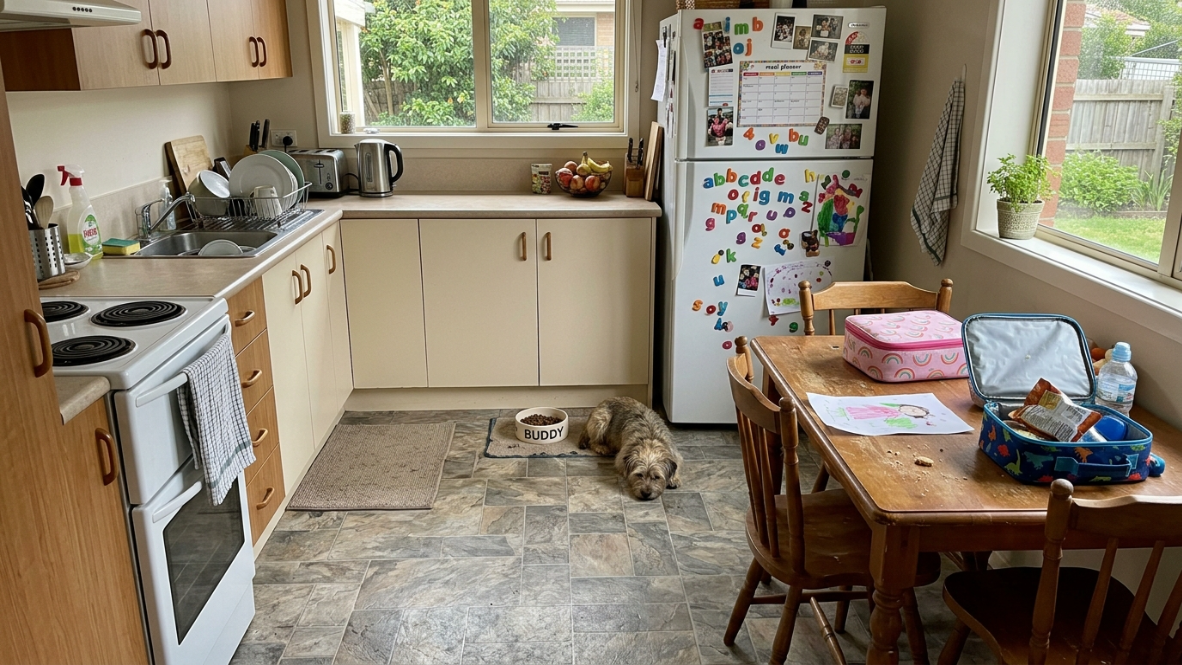
Sheet vinyl is not glamorous, but it solves one kitchen water problem better than almost anything: it has fewer seams. A large, continuous sheet means fewer entry points for water, which is exactly what you want in a kitchen where the sink, dishwasher, and fridge are all potential leak sources.
Pricing:
- Basic sheet vinyl material can cost as little as $1 to $2 per square foot
- Professional installation, seam placement, adhesive, and old flooring removal add to the total
- Quality sheet vinyl with professional installation and maintenance can last 10 to 20 years
Key features:
- Fewest seams of any kitchen flooring option
- Effective moisture barrier for daily spills and cleaning
- Softer and warmer than tile
- Low material cost makes it ideal for tight budgets and quick refreshes
- Works well in laundry adjacent kitchens and utility spaces
What real homeowners say:
A Reddit flooring commenter noted that modern glass backed sheet vinyl may be the closest thing to an actual “waterproof floor,” especially when coved up walls, but it can still tear. Retailers warn that sheet vinyl can be difficult to repair invisibly because replacement patches often stand out.
Tradeoffs:
- Lower design ceiling than SPC, WPC, or porcelain tile
- Damage like cuts, tears, and burns is hard to patch without a visible repair
- Subfloor imperfections can telegraph through the sheet
- Handling large sheets usually requires professional installation
- Perceived as a lower end choice, which can affect resale appeal
Verdict: Sheet vinyl is not the sexiest floor, but for a tight budget waterproof kitchen flooring project where fewer seams matter, it can outperform trendier plank floors.
6. Waterproof Laminate
Best for: Scratch resistant wood look in kitchens with lower leak risk, where homeowners dislike the feel of vinyl.
Modern waterproof laminate has improved dramatically. The surface is often harder and more scratch resistant than vinyl, and the best products now carry manufacturer approval for kitchen installation. But the core is still typically wood fiber based, which means it must be treated differently than vinyl or tile.
Pricing:
- Professional installation labor runs roughly $2 to $8 per square foot
- Quality laminate can last 10 to 30 years with proper installation and care
- Material, pad, transitions, and floor prep are separate line items
Key features:
- Harder surface than vinyl, better scratch resistance
- Realistic wood look textures and embossing
- Better topical spill resistance than traditional laminate
- Can be installed as a floating floor
Buying checklist:
- Look for manufacturer specified waterproof or wet area approval. NALFA notes that laminate can be used in kitchens but is not suitable for excessive moisture areas unless the manufacturer specifies it as waterproof.
- Check the AC rating for abrasion resistance.
- Seal expansion gaps near sinks, pipes, and moisture prone perimeters per manufacturer instructions.
- Avoid wet mopping unless the product specifically allows it.
What real homeowners say:
Reddit sentiment on waterproof laminate is split. Some users like newer products for abrasion resistance and realistic wood look. Others focus on what happens when a dishwasher leaks a gallon of water under the floor. One Reddit user noted that most water resistant laminate is rated for limited standing water exposure and still should not be wet mopped or left wet.
Tradeoffs:
- Wood fiber core can swell if water gets inside from below, through seams, or around edges
- “Waterproof laminate” claims vary widely between manufacturers
- Not the best choice for kitchens with known plumbing problems or older appliances
- Manufacturer installation details must be followed precisely
Verdict: Waterproof laminate is good for topical spills, not for homeowners who want a floor to forgive hidden plumbing leaks.
7. Sealed Cork Flooring
Best for: Home cooks who stand for long periods, eco conscious homeowners, and kitchens where comfort outweighs maximum water resistance.
Cork is not the top waterproof choice, but it keeps showing up in kitchen flooring conversations for a simple reason: it feels great underfoot. If you cook daily and hate standing on hard tile or rigid vinyl, cork is worth considering.
Pricing:
- Cork materials run about $5 to $14 per square foot
- Installed, expect $6 to $16 per square foot, with kitchen installations costing more due to sealing requirements
- Re sealing costs are ongoing maintenance expenses
Key features:
- Naturally warm, soft, and resilient underfoot
- Quieter than tile or SPC
- Sustainable material with a better environmental story than most vinyl
- Can be finished in a variety of tones and patterns
- Provides natural insulation
What real homeowners say:
In a Reddit kitchen flooring thread, one user said they had installed cork in multiple kitchens and loved it, calling it their first choice. But the same thread raised a practical concern about how cork wears with dogs, which is exactly the kind of question you should resolve before buying.
Tradeoffs:
- Not truly waterproof; water resistant only when sealed and maintained
- Needs periodic re sealing to maintain protection
- Pet claws can scratch and dent the surface
- Standing water will damage cork over time
- Not ideal for rentals or high abuse kitchens where maintenance will be inconsistent
Verdict: Cork is for people who value comfort and warmth enough to maintain the floor. It is not the set it and forget it waterproof kitchen flooring option.
8. Polished Concrete or Epoxy Coating
Best for: Slab homes, modern or industrial kitchens, and homeowners who want a nearly seamless, low maintenance surface.
Concrete and epoxy are not typical suburban kitchen choices, but they work well when the home already has a concrete slab and the design supports a modern, industrial, or minimalist look. The slab itself becomes the finished floor.
Pricing:
- Polished concrete commonly costs $2 to $16 per square foot
- Kitchen epoxy application runs about $3 to $12 per square foot depending on color and finish
- Hidden costs include grinding, crack repair, moisture mitigation, and curing time during which the kitchen is out of service
Key features:
- Extremely durable and long lasting
- Nearly seamless surface with no grout lines or plank joints
- Easy to clean when properly sealed
- Works well with radiant heating
- Can be stained, dyed, or coated for custom looks
What real homeowners say:
A Reddit homebuilding post showed polished concrete paired with a new kitchen and described the floor tone as working well with the overall design. But another Reddit discussion was much more skeptical, with a user saying they had never seen a concrete floor that did not look rough after real use. Opinions are genuinely split.
Tradeoffs:
- Hard and cold underfoot, so anti fatigue mats are almost mandatory
- Slab cracks may telegraph through the finish
- Moisture vapor from below can affect coatings
- Not easy to change later if you want a different look
- Style is polarizing; not everyone wants an industrial kitchen floor
Verdict: Concrete and epoxy are excellent when the slab is already part of the design. They are not a shortcut for every kitchen.
9. Peel and Stick Vinyl Tile
Best for: Temporary cosmetic refreshes only, not long term waterproof kitchen flooring.
Peel and stick vinyl tile appears in many waterproof kitchen flooring searches because people want a cheap, fast fix. This section is here so you understand what you are getting, and more importantly, what you are not.
Pricing:
- Low upfront material cost
- The real cost is failure: adhesive release, edge curling, water intrusion at every seam, and the labor to remove and replace it
Key features:
- Easy DIY installation with no tools
- Many patterns and styles available
- Can refresh a small kitchen quickly
- Works best over a very smooth, clean, stable surface
What real homeowners say:
A flooring professional with 25 years of trade experience shared on a forum that they still do not trust peel and stick for kitchens and prefer LVP/LVT for durability and repairability. A first person Livingetc article described peel and stick kitchen tiles needing replacement after one year, with kitchen performance significantly worse than bathroom performance.
Tradeoffs:
- Seams are the weakest of any vinyl product
- Adhesive fails over time, especially in temperature variable kitchens
- Not a true waterproof kitchen floor assembly
- Can look cheap after just months of use
- Removal can be frustrating, and in older Washington homes, pulling up old vinyl may trigger asbestos concerns. Washington L&I lists vinyl floor tiles, backing, and adhesives among materials that can contain asbestos.
Verdict: Peel and stick vinyl is a temporary design bandage. If the kitchen gets real traffic or water, step up to sheet vinyl, SPC/LSPC, or tile.
Waterproof Kitchen Flooring Brand Comparison
Choosing a flooring type is only half the decision. The brand and product line you pick within that type determines quality, warranty coverage, and how the floor actually performs five years in. Practitioners on Reddit frequently warn that the gap between a $2/sq. ft. SPC and a $6/sq. ft. SPC from a reputable brand is enormous, even though both labels say “waterproof.”
Here is a breakdown of widely discussed brands across the most popular waterproof kitchen flooring categories.
SPC/Rigid Core Vinyl Brands
| Brand | Notable Product Line | Price Range (material) | Key Differentiator | Common Feedback |
|---|---|---|---|---|
| COREtec | COREtec Pro Plus, Originals | $4 to $8/sq. ft. | Patented core with attached cork underlayment | Reddit users often call it the “gold standard” for LVP; complaints mostly about price |
| Shaw Floorté | Floorté Pro, Floorté Elite | $3 to $7/sq. ft. | Wide selection; available through Shaw authorized dealers | Praised for color variety; some installer threads flag inconsistent click fit on lower tier lines |
| Mohawk (RevWood, SolidTech) | SolidTech Plus | $3 to $6/sq. ft. | Large retail distribution; RevWood is laminate based, SolidTech is rigid vinyl | Users appreciate availability; confusion between the RevWood (laminate) and SolidTech (vinyl) lines is common |
| LifeProof (Home Depot exclusive) | LifeProof Rigid Core | $2 to $4/sq. ft. | Budget friendly, widely available | Reddit DIYers praise value; pros note thinner wear layers on entry models and occasional click system issues |
| Karndean | Korlok, Knight Tile | $4 to $9/sq. ft. | Commercial grade quality available in residential formats | Highly rated by installers for click system quality; premium pricing limits adoption in budget projects |
| MSI (Everlife) | Everlife Rigid Core | $2 to $5/sq. ft. | Distributor brand with extensive stone and tile offerings | Popular for contractors buying flooring alongside tile; quality feedback is mixed depending on the specific SKU |
Porcelain Tile Brands
| Brand | Typical Price (material) | Key Differentiator |
|---|---|---|
| Daltile (Mohawk) | $3 to $12/sq. ft. | Largest US manufacturer; huge style range |
| Marazzi (Mohawk) | $2 to $8/sq. ft. | Strong wood look porcelain lines |
| Florida Tile | $4 to $10/sq. ft. | US made; strong commercial reputation |
| Emser Tile | $3 to $10/sq. ft. | Designer focused with good trade distribution |
Sheet Vinyl Brands
| Brand | Typical Price (material) | Key Differentiator |
|---|---|---|
| Armstrong (Congoleum) | $1 to $4/sq. ft. | Longest track record; widest pattern selection |
| Tarkett | $1 to $3/sq. ft. | Good commercial and residential lines |
| IVC/Mohawk Home | $1 to $3/sq. ft. | Budget friendly with improving design options |
What to Watch For When Comparing Brands
Wear layer thickness matters more than brand name. A 20 mil wear layer from a lesser known brand can outperform a 12 mil product from a premium brand in a high traffic kitchen. Always check the spec sheet, not just the logo.
Warranty terms vary wildly. Some brands offer lifetime residential warranties that cover manufacturing defects but exclude water damage through seams. Others specifically warrant against moisture related issues. Read the exclusions.
Availability and lead times differ by region. Practitioners on Reddit note that brands like COREtec and Karndean are sometimes hard to find in stock, while LifeProof and Shaw are easier to grab quickly from big box stores. For contractors in Washington working on tight timelines, stock availability from regional suppliers can cut days off a project schedule.
Retailer exclusive lines limit comparison shopping. LifeProof is only at Home Depot, SmartCore is only at Lowe’s. These products cannot be directly price compared across retailers, which makes it harder to evaluate value. One YouTube installer walkthrough noted that exclusive lines sometimes use thinner cores or simpler click systems to hit aggressive retail price points.
Certifications are not universal. Not every product within a brand’s lineup carries FloorScore or ASSURE certification. The premium line might be certified while the budget line is not. Always verify certification at the SKU level, not the brand level.
The bottom line: brand reputation gives you a starting point, but the specific product line, wear layer, click system, and certification details determine whether a floor will hold up in a real kitchen.
How to Choose the Right Waterproof Kitchen Flooring
Forget brochure claims. Choose based on your actual kitchen situation:
- Choose Krafter’s Land if you are a contractor or dealer in Washington State who wants to source SPC/LSPC flooring, porcelain tile, cabinets, and countertops from one regional supplier with fast lead times.
- Choose SPC/LSPC if you want the best overall balance of water resistance, cost, comfort, and speed.
- Choose porcelain tile if you want maximum durability and accept the cost and hardness tradeoff.
- Choose WPC if comfort matters more than maximum rigidity.
- Choose sheet vinyl if budget and seam reduction matter most.
- Choose waterproof laminate if scratch resistance and wood realism matter, and your kitchen has low leak risk.
- Choose cork if comfort matters enough to commit to maintenance.
- Choose concrete/epoxy if you already have a suitable slab and want a modern look.
- Avoid peel and stick unless you need a purely temporary fix.
If your kitchen opens into the living room, bring samples into both rooms before choosing a wood look vinyl. Color and pattern repeats that look fine in a 3 inch sample can look obvious across a full kitchen. Check dishwasher clearance before adding a thicker floor.
When coordinating flooring color with the rest of the kitchen, matching your countertop and cabinet tones matters. This guide on matching quartz with cabinets covers how to pull design tones together.
Before You Install: The Contractor Checklist
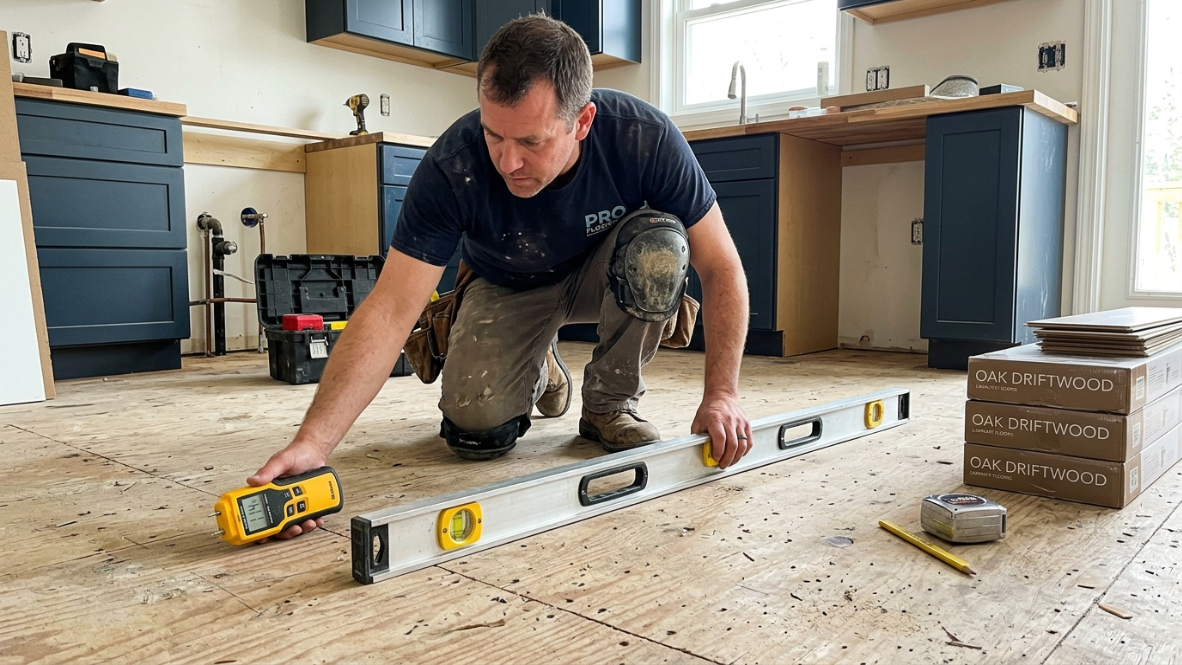
Whether you are a homeowner hiring an installer or a contractor running the project, these steps prevent the most common waterproof kitchen flooring failures:
- Measure floor area and waste factor. Budget 10% waste for planks, more for diagonal or complex layouts.
- Check subfloor flatness and moisture. Flooring pros on Reddit repeatedly say subfloor prep beats spec sheet obsession. Even high quality product fails over an uneven or damp substrate.
- Decide whether old flooring is removed or covered. Not all products can go over existing flooring.
- Confirm asbestos testing for older homes. If you are in Washington and the home has old vinyl, linoleum, or mastic, test before demo.
- Plan cabinet and appliance sequencing. Floating floors generally should not be pinned under fixed cabinets. Confirm the manufacturer’s requirements. If you are coordinating cabinet installation alongside flooring, this kitchen remodel checklist walks through the full sequencing.
- Confirm transitions to adjacent rooms. Height differences, doorways, and material changes need proper transition strips.
- Detail wet area edge treatment. Ask about silicone at sinks, dishwashers, and exterior door thresholds.
- Save extra planks or tiles for future repairs. One unopened box can save a costly callback years later.
- Get warranty and installation scope in writing. Ask who is responsible for moving appliances, reinstalling trim, and handling unexpected subfloor repairs.
Questions to Ask Your Installer
- What is the subfloor flatness tolerance for this product?
- Will you moisture test the slab or wood subfloor?
- Does this product allow installation in kitchens?
- What happens under the dishwasher and refrigerator?
- Are cabinets installed before or after flooring?
- Are transitions, baseboards, and trim included in the quote?
- What certifications does the floor carry (FloorScore, ASSURE)?
- What warranty applies to the product versus the labor?
Red Flags in a Flooring Quote
- No line item for floor prep
- Installer says all waterproof floors are basically the same
- No discussion of dishwasher or fridge zones
- No product data sheet provided
- No mention of expansion gaps for floating floors
- Missing line items for transitions, trim, demo, disposal, or leveling
If you are planning a full kitchen remodel (not just flooring), it helps to coordinate materials in one place. You can compare quartz and granite countertops and see how countertop choices connect to your floor selection.
Slip Resistance: A Detail Most Guides Skip
Wet kitchens are slip hazards. The CDC reports that more than 14 million adults age 65 and older report falling each year, and falls are the leading cause of injury in that age group. Polished porcelain tile, smooth vinyl, and sealed concrete can all be slippery when wet.
Look for manufacturer slip resistance classifications when choosing waterproof kitchen flooring. TCNA notes that ANSI A326.3 requires hard surface flooring manufacturers to provide product use classifications based on slip resistance properties. This matters for kitchens in multigenerational homes, rentals, and any space where wet floors are a daily reality.
Indoor Air Quality: Certifications That Matter
Vinyl and laminate flooring can emit volatile organic compounds. If indoor air quality is a concern (and it should be), look for these labels:
- FloorScore: Independently certified for VOC emissions criteria under California Section 01350.
- ASSURE Certified: Applies to WPC/SPC rigid core products and covers indoor air quality, performance, heavy metals, and ortho phthalates.
- CARB Phase 2 / EPA TSCA Title VI: Relevant for composite wood products, including laminate cores.
These certifications are not marketing fluff. They give contractors and homeowners documented proof that the product meets recognized emissions standards.
Frequently Asked Questions
What is the best waterproof flooring for a kitchen?
SPC/LSPC rigid core vinyl is the best all around waterproof kitchen flooring for most homes. It handles daily spills, resists water damage, installs quickly, and works with most budgets. Porcelain tile is the best option for maximum long term durability, but it costs more and feels harder underfoot.
Is waterproof vinyl plank really waterproof?
The material itself is waterproof. It will not swell, warp, or delaminate from water contact. But the floor assembly is not a sealed membrane. Water can reach the subfloor through seams, expansion gaps, and edges during an appliance leak. Waterproof flooring protects the floor. It does not automatically protect the house.
Is tile better than LVP in a kitchen?
Tile wins on raw durability and water resistance. LVP/SPC wins on comfort, installation speed, and often budget. The right choice depends on whether you prioritize a forever floor (tile) or a practical, comfortable floor for the next 15 to 20 years (vinyl).
Can waterproof laminate go in a kitchen?
Yes, if the manufacturer specifically approves kitchen or wet area use. But waterproof laminate still has a wood fiber core that can swell if water penetrates below the surface. It handles topical spills well. It is not the safest choice for kitchens with older plumbing or leak prone appliances.
What is the cheapest waterproof kitchen flooring?
Sheet vinyl is usually the most affordable option, with material costs as low as $1 to $2 per square foot. It also has fewer seams than plank products, giving it a practical advantage in kitchens where budget and water protection both matter.
Should flooring go under kitchen cabinets?
It depends on the flooring type and manufacturer instructions. Floating floors (SPC, WPC, laminate) generally should not be pinned under fixed cabinets because they need room to expand and contract. Tile and sheet vinyl can typically go under cabinets. Always follow the specific product’s installation guide.
What floor is best for kitchens with dogs?
SPC/LSPC rigid core vinyl and porcelain tile handle pet traffic best. Look for a wear layer of at least 20 mil on vinyl products and check for appropriate slip texture. Cork and laminate are more vulnerable to scratching from pet claws.
Do I need to remove old vinyl before installing new waterproof flooring?
Not always. Some products can install over existing vinyl if the surface is smooth, flat, and well bonded. But old flooring condition, height transitions, and asbestos risk all matter. In Washington, vinyl tiles, backing, and adhesives from older homes can contain asbestos and must be identified before any renovation work begins.
Which waterproof flooring brand is the best?
There is no single best brand. COREtec and Karndean are consistently praised by installers for click system quality, but they cost more. LifeProof and Shaw Floorté offer solid options at lower price points. The specific product line, wear layer thickness, and certification matter more than the brand name on the box.
Planning a kitchen remodel in Seattle, Tacoma, Lynnwood, Tukwila, or Spokane? See recent kitchen and bath projects or request a free consultation to coordinate flooring, cabinets, quartz countertops, tile, and fixtures through one regional supplier.