TL;DR
Natural shaker cabinets are five piece cabinet doors finished with a clear coat or light stain that lets the wood grain show through, rather than being covered in paint. They combine the clean line simplicity of shaker design with the warmth of visible wood. As of 2026, natural wood cabinets have overtaken white as the most popular kitchen cabinet choice, with white oak leading as the preferred species among design professionals.
Quick Answer: What Are Natural Shaker Cabinets?
Natural shaker cabinets are five piece shaker style cabinet doors finished with a clear coat, transparent stain, or other low pigment finish that allows the wood grain and natural color to remain visible. “Natural” describes the finish, while “shaker” describes the door construction and profile. In 2026, wood cabinetry is especially popular, with white oak leading among wood species specified by kitchen design professionals.
The key distinction: natural = visible wood finish; shaker = door style. A natural shaker cabinet can be made from white oak, maple, birch, cherry, walnut, or other wood species and can use either a standard or slim shaker profile.
Natural Shaker Cabinets at a Glance
| Feature | Natural Shaker Cabinets |
|---|---|
| Door style | Shaker, typically five piece construction |
| Finish | Clear coat, transparent stain, or light pigment finish |
| Wood grain | Visible |
| Common species | White oak, maple, birch, cherry, walnut |
| Color range | Light blonde, natural oak, warm brown, gray toned and other wood tones |
| Profile options | Standard shaker or slim shaker |
| Cabinet box | Available in framed and frameless construction |
| Main advantage | Combines simple shaker geometry with natural wood character |
| Main consideration | Grain, color variation and construction quality are more visible |
| 2026 trend | Wood cabinetry is currently leading white in the Houzz survey of renovating homeowners |
Choosing kitchen cabinets is one of the highest impact decisions in any remodel, and the term “natural shaker” keeps showing up in spec sheets, design boards, and client requests. But what does it actually mean? Is “natural” a wood species, a color, a finish type, or just a marketing label?
The answer is simpler than you’d expect, and understanding it will help contractors, designers, and homeowners make better purchasing decisions.
Exploring cabinet options for an upcoming project? Check out this guide for trade pros to compare supplier features before you commit.
What Are Natural Shaker Cabinets?
Natural shaker cabinets are shaker style cabinet doors finished in a way that keeps the wood grain visible. Instead of being covered with paint (white, grey, navy, or any other color), the wood receives a clear coat, matte sealer, or light stain that preserves and highlights its natural texture, color, and character.
Two concepts combine to form the term:
Shaker style refers to the door profile. It’s a flat, recessed center panel framed by square edged rails and stiles with no ornamental molding, no raised panels, and no carved detail. For a broader look at how shaker fits among other options, this cabinet door styles guide covers the full range.
Natural finish refers to the surface treatment. The wood itself is the design element. You see the grain, the tone variations, and the warmth of real wood rather than a layer of pigmented paint.
One important clarification: “natural” describes the finish, not the door profile. A natural shaker cabinet can have standard width stiles and rails (typically 2 to 3 inches) or the narrower proportions of a slim shaker design. Both exist in natural finishes.
Worth noting: many cabinet brands use “Natural Shaker” as a specific product line color name, usually a light maple, birch, or oak tone. So you’ll sometimes see it as a finish descriptor and other times as a catalog SKU. Context matters when reading spec sheets.
Natural Shaker vs. Slim Shaker: What Is the Difference?
Natural and slim shaker describe different characteristics of a cabinet door, so they are not competing finish options.
Natural describes the finish: the wood grain remains visible.
Slim shaker describes the door profile: the rails and stiles are narrower than those on a traditional shaker door.
That means you can have a natural slim shaker cabinet. You can also have a natural standard shaker, painted slim shaker, or painted standard shaker. For a side by side breakdown, this comparison of white shaker vs slim shaker illustrates how the profiles differ regardless of finish.
| Term | Describes | Example |
|---|---|---|
| Natural | Finish | Natural white oak |
| Shaker | Door profile | Five piece recessed panel door |
| Slim shaker | Narrower door profile | White oak slim shaker |
| Painted | Finish | White painted shaker |
When comparing cabinet samples, evaluate the finish and door profile separately rather than treating “natural shaker” and “slim shaker” as interchangeable terms.
Five Piece Construction: How Natural Shaker Doors Are Built
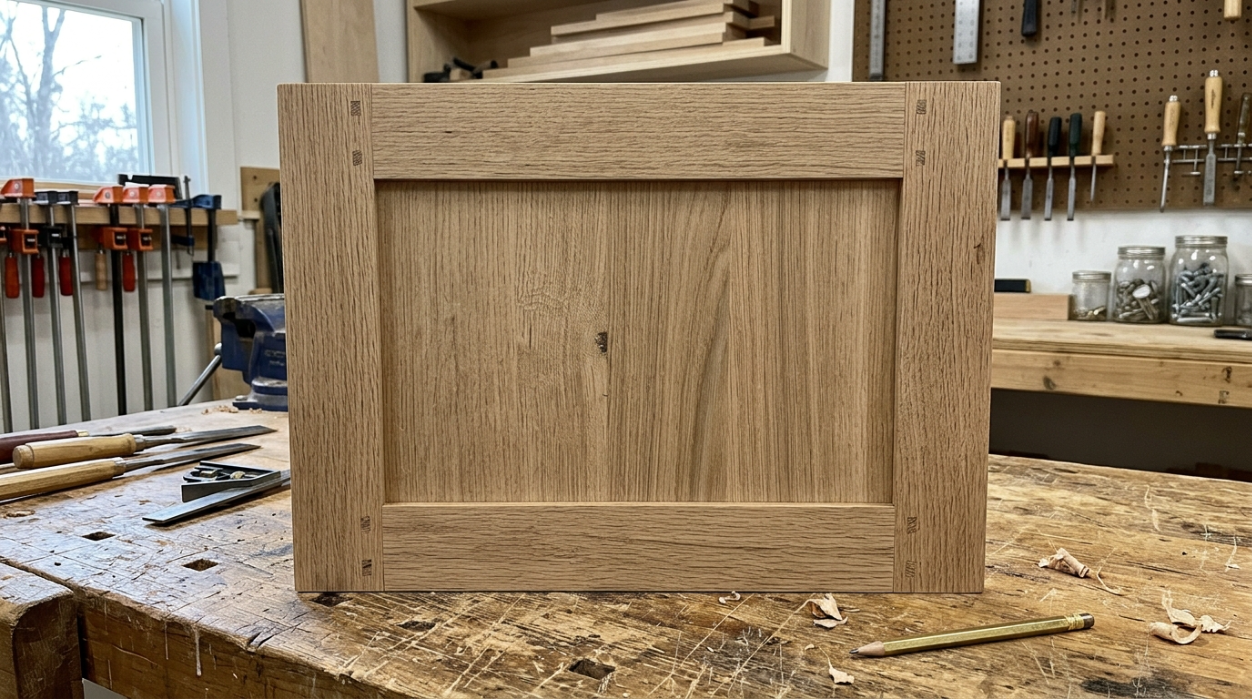
A shaker door uses a straightforward five piece construction. Two stiles run vertically along the sides. Two rails run horizontally across the top and bottom. Together they frame a flat center panel. The stiles and rails meet at square edges, creating the slightly recessed look that gives shaker its signature geometry.
The center panel is designed to float within the frame. This allows the wood to expand and contract with humidity changes without cracking, a small engineering detail that speaks to why the style has lasted centuries.
Here’s what matters specifically for natural finish cabinets: when there’s no paint hiding the surface, construction quality becomes much more visible. Grain matching between panels, the tightness of cope and stick or mortise and tenon joints, and seam consistency all show through a clear coat in ways they never show through paint. A poorly matched door panel that would disappear under two coats of white becomes an obvious flaw under a transparent finish. For a deeper look at what separates good construction from bad, this cabinet box construction guide covers materials and joinery in detail.
This five piece construction works in both framed and frameless cabinets, so the shaker profile isn’t locked to one box type. The choice between framed and frameless is a separate decision from whether to go natural or painted.
Common Wood Species for Natural Shaker Cabinets
Not all wood species work equally well in a natural finish. The grain pattern, hardness, and color tone of the wood become the defining visual feature, so species selection matters more than it does for painted cabinets.
| Species | Janka Hardness | Best Application | Key Characteristic |
|---|---|---|---|
| Hard Maple | 1,450 lbf | Light natural finish or painted | Fine, closed grain that creates a smooth surface with minimal grain texture and strong dent resistance |
| White Oak | 1,360 lbf | Stained or natural finish | Natural water resistance through cellular structures called tyloses, making it especially practical near sinks |
| Birch | 1,260 lbf | Budget natural or painted | Similar grain and durability to maple at a lower price point |
| Cherry | 950 lbf | Rich natural tones | Develops deeper, richer color over time with UV exposure, which requires client education about darkening |
| Walnut | 1,010 lbf | Dark natural finish | Rich chocolate tones with dramatic grain, popular for islands and accent pieces in two tone kitchens |
White oak has emerged as the clear frontrunner. According to the NKBA’s 2026 Kitchen Trends Report, 51% of design professionals specified white oak, making it the most popular species for wood grain cabinetry. Its subtle grain pattern and adaptable tone work in both warm and cool palettes.
Birch is the budget friendly alternative, but it comes with a catch. Practitioners on woodworking forums consistently report that birch shows uneven stain absorption and blotching if not pre sealed before finishing. Under paint, birch performs great. Under a natural clear coat or stain, that pre seal step is non negotiable.
Wood species options can vary significantly between stock, RTA, and custom cabinet tiers. Stock and RTA lines typically offer maple, birch, or oak. Cherry and walnut are more common in semi custom and custom programs.
Rift Sawn vs. Plain Sawn: Why the Cut Matters
The way a log is cut affects the grain pattern as much as the species itself. Two boards from the same white oak tree can look dramatically different depending on the sawing method.
Plain sawn (also called flat sawn) is the most common and least expensive cut. It produces the familiar cathedral or arched grain pattern. This cut yields more usable boards per log, which keeps costs lower. The tradeoff is more visible grain variation from door to door, which makes consistent matching harder in natural finish applications.
Rift sawn cuts the log at a steep angle to the growth rings, producing tight, straight, parallel grain lines. This is the cut most often specified for high end natural shaker kitchens, particularly in white oak, because it minimizes the “busy” look of plain sawn grain. The downside is cost: rift sawing wastes more material and produces fewer boards per log, so expect a meaningful upcharge.
Quarter sawn falls between the two. It reveals distinctive ray flecks (sometimes called medullary rays) that add character, especially in oak species. Some homeowners love the flecking. Others find it too busy. Request a sample before committing.
Practitioners on Reddit note that specifying rift sawn white oak solves most grain matching complaints, but at a price premium that can run 30% to 50% over plain sawn. For projects where budget matters, using rift sawn on the most visible cabinet faces (uppers, island fronts) and plain sawn on less visible areas (pantry interiors, utility rooms) is a common compromise.
Why Natural Shaker Cabinets Are Trending in 2026
This is not a niche preference. Natural wood has overtaken painted white cabinets as the most popular kitchen cabinet finish, and multiple independent data sources confirm it.
The Houzz 2026 Kitchen Trends Study, surveying 1,780 homeowners, found that wood cabinets reached 29% market share, up six points year over year, while white fell to 28%. MasterBrand’s annual report noted that for the first time in nine consecutive years, white was not the top preferred finish. And the NKBA’s 2026 report (634 industry professionals) found that 59% of design professionals identified wood grain as a growing trend.
What’s driving this shift? A few factors converge.
Warm minimalism is replacing sterile white. Homeowners are rejecting the all white kitchen that dominated the 2010s. They want warmth and texture without heaviness, and natural wood shaker cabinets deliver that through clean lines paired with organic material.
Two tone designs create demand for natural wood. A popular approach pairs a natural wood island with painted perimeter cabinets (or the reverse). This means even kitchens that aren’t fully natural still incorporate natural finish shaker pieces.
Maintenance advantages over paint. Wood cabinets typically look newer for longer than painted cabinets. Chips and scratches on painted surfaces create high contrast damage that’s tedious to repair. On natural wood, a scratch shows less contrast (wood against wood) and is easier to blend or touch up.
For contractors and dealers, this trend shift has practical implications: lead times and inventory planning may need to account for growing demand in natural finish lines alongside a potential slowdown in painted white orders.
This Is Not Your Parents’ Honey Oak
The biggest objection to natural wood cabinets is predictable: “Won’t my kitchen look like it’s from 1995?”
No. Today’s natural shaker cabinets share almost nothing with the heavy, orange toned oak kitchens of the 1990s. The differences are fundamental, not cosmetic.
Modern natural finish cabinets use cooler, cleaner stains with significantly less orange in the finish. The door profiles are flatter (shaker and slim shaker rather than cathedral arch raised panels). The wood tones are lighter and more varied, leaning toward warm grey, honey blonde, and pale wheat rather than amber honey. The overall approach feels layered and intentional rather than monolithic.
As multiple design commentators have put it: this is not the orange oak from the ’90s. The new approach features simpler cabinetry profiles, softer finishes, and more natural variation in tone and grain.
Redditors have also weighed in on the broader wood versus paint debate. Discussions aggregated by House Digest note that while softwood cabinets (spruce, cedar) scratch and nick easily, hardwood species like maple and oak hold up well over time. The takeaway for anyone specifying natural shaker cabinets: stick to hardwoods.
Natural Shaker vs. Painted Shaker: Key Differences
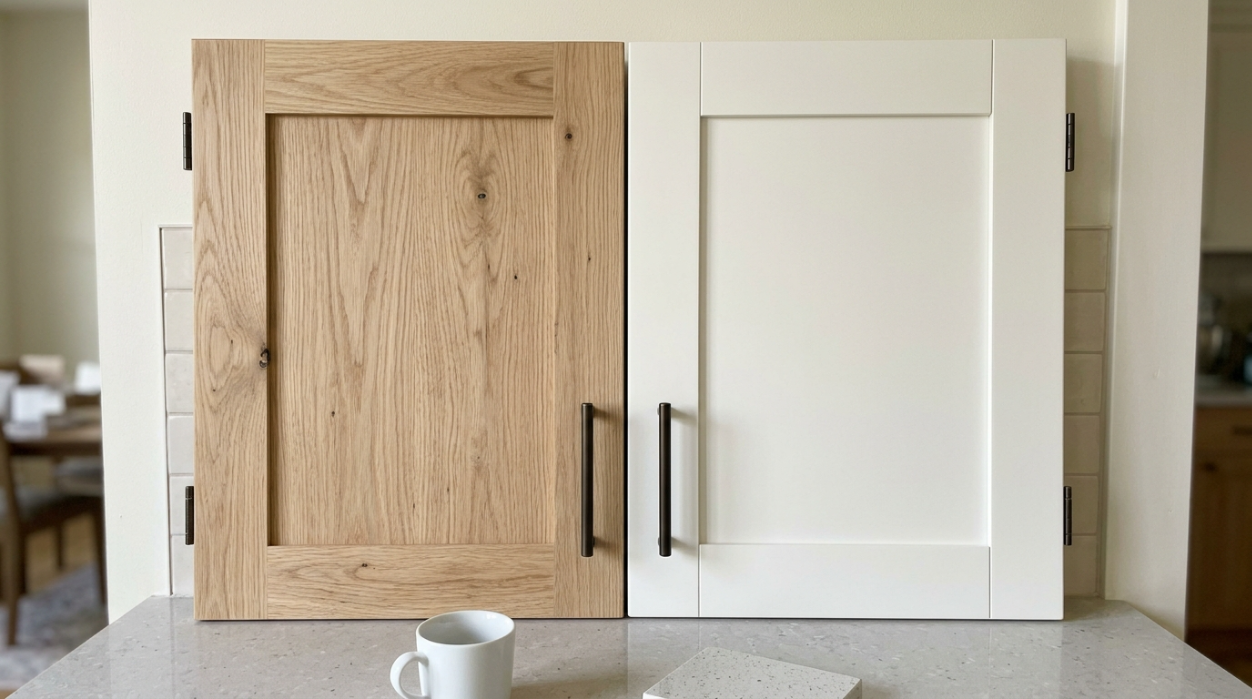
Both use the same five piece door construction. The differences come down to finish, maintenance, and visual impact.
| Factor | Natural Shaker | Painted Shaker |
|---|---|---|
| Surface | Visible wood grain with clear coat or light stain | Opaque paint covering the wood |
| Scratch visibility | Low contrast (wood on wood), easier to repair | High contrast (paint chip reveals substrate), harder to hide |
| Color options | Limited to wood tone range (blonde, honey, warm brown, grey toned) | Unlimited palette |
| Aging | Develops patina, may deepen in tone | Can yellow, crack, or chip over time |
| Construction visibility | Exposes grain matching, joinery quality, and seam tightness | Hides inconsistencies under paint |
| Typical cost | Similar at stock/RTA level; potentially more at custom level due to grain matching labor | Similar at stock/RTA level; potentially less at custom level |
Countertop pairings also shift depending on your cabinet finish. Natural wood tones pair beautifully with white quartz, marble look surfaces, and concrete inspired slabs. For more detail, see this guide on matching quartz with cabinets.
For a quick cost comparison across kitchen sizes, the 10×10 benchmark is a useful starting point regardless of finish choice.
Finish Types for Natural Shaker Cabinets
Not all “natural” finishes are the same. The type of clear or low pigment finish you choose affects the look, feel, durability, and maintenance of the cabinets. Here are the most common options.
Conversion Varnish
This is the industry standard for production cabinetry. Conversion varnish is a catalyzed finish that cures hard and resists moisture, chemicals, and heat better than most alternatives. It can be applied in matte, satin, or semi gloss sheens. Most factory finished natural shaker cabinets from mid range and higher suppliers use some form of conversion varnish.
Polyurethane (Water Based vs. Oil Based)
Water based polyurethane dries clear and keeps the wood’s natural color intact, which makes it a strong choice for light toned species like maple and birch. Oil based polyurethane adds a slight amber warmth, which can enhance the appearance of white oak or cherry but may push lighter woods into unwanted yellow territory. One YouTube walkthrough from a cabinetmaker demonstrated the difference side by side on maple: the water based side stayed true to the raw wood color, while the oil based side yellowed noticeably within six months.
Lacquer
Lacquer dries fast, sprays well, and builds to a smooth film. It’s popular in custom shops because of its quick turnaround and repairability. The downside is that lacquer is softer than conversion varnish, so it scratches and wears more easily in high traffic kitchens.
Hardwax Oil
This is the finish of choice for the Scandinavian and Japandi looks. Hardwax oil penetrates the wood rather than sitting on top of it, giving a very matte, tactile feel. The wood looks and feels like raw wood, just protected. The tradeoff: it needs periodic reapplication (every one to two years in high use areas), which makes it better suited to homeowners who don’t mind maintenance.
Tung Oil and Danish Oil
These penetrating oils are more common in furniture than production cabinetry, but they show up in custom work. They provide minimal surface protection, so they’re not ideal for kitchens near sinks and cooktops. Beautiful, but impractical for most kitchen applications.
The finish choice should match the client’s lifestyle. Families with young children and heavy kitchen use should lean toward conversion varnish or water based polyurethane. Clients chasing a specific aesthetic and willing to maintain it may prefer hardwax oil.
Design Styles That Pair With Natural Shaker
Natural shaker cabinets work across a wider range of design aesthetics than most people assume. Their clean lines and warm tone make them a surprisingly versatile base.
Modern farmhouse. Natural wood plus matte black hardware and open shelving. The shaker profile’s simplicity prevents the look from feeling overdone.
Scandinavian. Light toned natural birch or maple shaker cabinets with minimal hardware, white countertops, and pale wood flooring create that clean Nordic warmth.
Transitional. Natural shaker sits perfectly between traditional and contemporary. Pair it with brushed brass hardware and a marble look quartz countertop for a space that doesn’t commit to any single era.
Japandi. The intersection of Japanese minimalism and Scandinavian warmth practically demands natural wood cabinets. White oak shaker doors with simple bar pulls and stone countertops fit this aesthetic exactly.
Organic modern. Think natural shaker base cabinets with open upper shelving, stone or concrete countertops, and woven or ceramic accents.
Hardware choices that complement natural shaker cabinets include matte black (for contrast), brushed brass (for warmth), and satin nickel (for a quieter, cooler look).
Want to see natural finish samples in person? Krafter’s Land has showrooms in the Seattle metro area, with designer focused features for evaluating wood tones, finishes, and hardware pairings.
How Natural Shaker Cabinets Age Over Time
One of the most underappreciated aspects of natural finish cabinetry is how it changes with age. Unlike painted cabinets, where aging means chipping and yellowing, natural wood develops a patina that many homeowners actually prefer to the original look.
UV Exposure and Color Shift
All wood species shift color when exposed to light. Cherry is the most dramatic example, deepening from a pale pinkish hue to a rich reddish brown within the first year or two of UV exposure. White oak shifts more subtly, developing a slightly warmer, golden tone. Maple can yellow slightly, especially under oil based finishes.
This matters for kitchen planning. If you install a natural cherry shaker kitchen and add an island six months later, the island doors will be noticeably lighter than the perimeter cabinets until they catch up. Designers who work with cherry regularly advise clients to order all doors at the same time and install them together.
Wear Patterns
High traffic areas (around handles, near the sink, below the cooktop) will show wear first. On painted cabinets, this wear shows as chips exposing the substrate. On natural finish cabinets, it typically shows as a slight smoothing or lightening of the finish, which reads as patina rather than damage.
Practitioners on Reddit report that families with natural oak kitchens often describe them as looking “better at 10 years than at 1 year,” which is the opposite of the typical painted cabinet experience.
Refinishing Potential
Natural finish cabinets are significantly easier to refinish than painted ones. A light sanding and fresh coat of polyurethane or conversion varnish can restore the surface without the multi step priming and painting process that painted cabinets require. This gives natural shaker cabinets a meaningful longevity advantage for homeowners who plan to stay in their homes long term.
Pros and Cons of Natural Shaker Cabinets
Natural shaker cabinets offer a balance between simple door styling and the visual character of real wood, but they are not ideal for every project.
Pros
- Natural grain adds warmth and texture.
- Shaker geometry works with modern, transitional and traditional interiors.
- Minor surface wear can be less visually obvious than a contrasting paint chip.
- Wood tones work well with stone, quartz and other countertop materials.
- Different species provide a wide range of grain patterns and colors.
- Natural wood can be combined with painted cabinets in two tone kitchens.
- Easier to refinish than painted cabinets, extending usable lifespan.
Cons
- Wood grain and color variation are more visible.
- Matching doors and panels can require more careful material selection.
- Some stains can emphasize uneven absorption or natural variation.
- Certain species change color as they age and are exposed to light.
- Natural wood limits the color palette compared with painted cabinetry.
- Premium species and custom grain matching can increase the project cost.
Best fit
Natural shaker cabinets are particularly well suited to homeowners who want a warm, simple cabinet design and are comfortable with the natural variation that comes with real wood.
If completely uniform color is the priority, painted shaker cabinets may be a better fit.
What to Check Before Buying Natural Shaker Cabinets
Whether you’re a contractor specifying cabinets for a client or a homeowner working with a designer, natural finish cabinets demand closer scrutiny than painted ones. Here’s what to look for.
Verify the Wood Species and Grade
Not all “natural” finishes use the same substrate. Some budget lines label a laminate or thermofoil as “natural” when it’s actually a printed wood grain pattern. Confirm you’re getting solid wood or real wood veneer, and ask about the species and grading. Knowing how to spot quality cabinets helps you avoid this common bait and switch.
Inspect Grain Matching
Request a sample door before committing to a full order. Look for inconsistent color between the center panel and the stiles and rails. With painted cabinets, this inconsistency is invisible. With natural finish, it’s the first thing your eye notices.
Confirm Construction Method
A true shaker door is five piece construction with a floating center panel. Some manufacturers produce one piece slab doors with routed lines to mimic the shaker look. The difference matters for both aesthetics and long term durability. Ask about the joinery type (cope and stick or mortise and tenon).
Evaluate the Box Material
The cabinet box matters as much as the door, especially when the interior is visible (glass front uppers, open shelving configurations). Plywood boxes hold screws better and resist moisture more effectively than particle board, which becomes more important in kitchens where humidity fluctuates. This plywood vs particle board guide breaks down the differences in detail.
Check Emissions Compliance
This one is especially important for unpainted cabinets. Paint itself acts as a partial barrier to formaldehyde off gassing from composite wood substrates. When cabinets have only a clear coat, the substrate’s emissions rating matters more. Look for CARB Phase 2 and EPA TSCA Title VI compliance, which are the current US standards for composite wood products. Reputable suppliers will have this documented.
Plan for Lead Times
Natural finish cabinets, particularly in white oak, may have different availability than standard painted stock. If you’re working on a tight timeline, confirm stock levels and lead times before finalizing your design.
Natural Shaker Cabinets in Small vs. Large Kitchens
Kitchen size affects how natural shaker cabinets look and feel in the space. The visual weight of wood grain behaves differently depending on the volume of cabinetry and the amount of natural light.
Small Kitchens
In compact kitchens, natural wood can either add warmth or make the space feel heavy, depending on the species and tone. Lighter species (maple, birch, light stained white oak) keep small kitchens feeling open. Darker species like walnut can overwhelm a small room unless balanced with lighter countertops, open shelving, and good lighting. Small kitchens also benefit from the slim shaker profile, which reduces the visual weight of the frame and makes doors look less chunky.
Practitioners on home renovation forums frequently recommend using natural wood on base cabinets only in small kitchens, with painted or open uppers to prevent the room from feeling enclosed.
Large Kitchens
Larger kitchens give natural shaker cabinets room to breathe. The grain pattern reads as texture rather than clutter. This is where medium and darker tones (honey oak, walnut, dark stained white oak) really shine, adding character to what might otherwise feel like a sterile, oversized space. Two tone layouts work especially well in large kitchens: natural wood on the island, painted perimeter, or the reverse.
Frequently Asked Questions
What does “natural” mean in natural shaker cabinets?
“Natural” refers to the finish, not the door style or wood species. It means the cabinet door is finished with a clear coat, matte sealer, or light stain that allows the wood grain and natural color to show through, as opposed to being covered with an opaque paint.
Are natural shaker cabinets more expensive than painted ones?
At the stock and RTA price tier, costs are generally comparable. At the semi custom and custom level, natural finish cabinets can cost slightly more due to the extra labor involved in grain matching and selecting consistent wood panels. Paint hides imperfections that a clear finish will not.
What wood is best for natural shaker cabinets?
White oak is the most popular choice in 2026, specified by 51% of design professionals in the NKBA’s annual survey. Hard maple works well for lighter tones. Birch is a solid budget option but needs a pre seal step to avoid stain blotching. Cherry offers rich color that deepens over time.
Will natural wood cabinets go out of style?
Trends always shift, but natural wood has a deeper staying power than any single paint color. The shaker profile itself has remained popular for over 200 years. The current move toward natural finishes is backed by a broad market shift across multiple industry surveys, not just a single season’s design preference.
What’s the difference between natural shaker and slim shaker?
“Natural” describes the finish (visible wood grain). “Slim shaker” describes the door profile (narrower stiles and rails for a more streamlined look). These are independent attributes. You can have a natural slim shaker, a painted slim shaker, a natural standard shaker, or a painted standard shaker.
Do natural shaker cabinets work in modern kitchens?
Yes. The flat panel and clean lines of shaker construction fit modern, contemporary, and minimalist designs when paired with the right hardware and countertops. Natural wood actually amplifies a modern design by adding warmth without visual clutter.
How do I maintain natural finish cabinets?
Wipe them with a soft damp cloth and mild soap. Avoid harsh chemical cleaners that can strip the clear coat. Natural finish cabinets are actually easier to maintain than painted ones because minor scratches and wear blend in rather than creating visible chips.
Is “Natural Shaker” a specific product or a general category?
Both. As a general category, it describes any shaker style cabinet with a natural wood finish. As a product name, many cabinet brands (including several RTA manufacturers) use “Natural Shaker” as a specific SKU or color designation, typically in a light maple or birch tone. Always confirm the actual wood species and finish details behind the product name.
What is rift sawn oak and why does it cost more?
Rift sawn oak is cut at a steep angle to the growth rings, producing straight, parallel grain lines instead of the wavy cathedral pattern of plain sawn boards. It costs more because the sawing method wastes more wood per log. It’s the preferred cut for high end natural shaker kitchens where consistent, clean grain is the priority.
Can I mix natural shaker cabinets with other finishes in the same kitchen?
Absolutely. Two tone kitchens are one of the strongest trends in 2026. Common pairings include natural wood base cabinets with painted white or grey uppers, or a natural wood island with painted perimeter cabinetry. The key is choosing a wood tone and paint color that complement rather than compete.
Ready to source natural shaker cabinets for your next project? Whether you’re a contractor, builder, or designer, comparing supplier pricing and lead times is the smart next step before committing to a line.